
Industrial Access Point Safety: How Self-Closing Safety Gates Prevent Falls at Elevated Work Areas
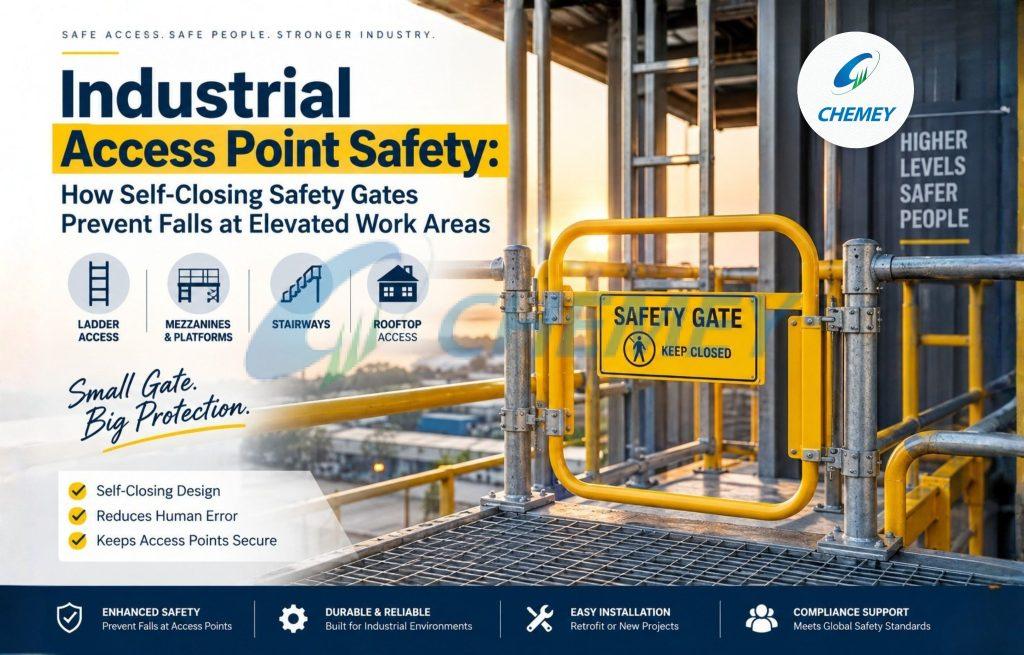
Industrial facilities are designed to move people, equipment and materials efficiently. But every access point between different levels can also introduce a fall hazard. Ladders, mezzanines, platforms, elevated walkways, rooftop access points and maintenance areas often require workers to pass through openings in otherwise protected guardrail systems. This creates an important engineering question: “How can workers safely enter and exit an elevated area without leaving a permanent gap in fall protection?” A properly specified self-closing industrial safety gate can provide a practical form of passive fall protection at these access points. Unlike chains, removable bars or manually operated barriers, a self-closing gate is designed to return to the closed position after a person passes through. What Is an Industrial Safety Gate? An industrial safety gate is a protective gate installed at an opening in a guardrail, platform, ladderway, walkway or other elevated access area. Its primary purpose is to maintain protection while still allowing authorized personnel to move through the access point. Common applications include:• Fixed ladder access• Stairway openings• Mezzanine platforms• Elevated work platforms• Rooftop access• Maintenance platforms• Industrial walkways• Machinery access areas• Restricted areas The gate becomes part of the overall access-protection system rather than simply functioning as a physical door. Why Are Access Points a Critical Fall-Protection Risk? A continuous guardrail can protect an exposed edge effectively—but an opening is still required wherever people need to enter or exit. For example:Guardrail → Access Opening → Ladder → Lower Level If the access opening is left unprotected, a worker approaching the ladder may be exposed to a fall hazard. This is why access-point protection needs to be considered as part of the complete fall-protection design. Self-Closing Safety Gates vs Manual Barriers One of the biggest advantages of a self-closing gate is that it helps reduce dependence on worker memory. Consider a conventional access opening protected by:• A chain• Removable pipe• Manual barrier• Swinging bar• Temporary barricade A worker may move the barrier and forget to replace it. That creates a new exposure. A self-closing gate is designed to return to its closed position automatically. Simple safety principle:Open for access → Worker passes → Gate returns to closed position. Where Should Industrial Safety Gates Be Used? 1. Fixed Ladder AccessFixed ladders are common in manufacturing plants, warehouses, rooftops, process plants, utility areas and industrial maintenance zones. 2. Mezzanine PlatformsMezzanines provide valuable additional floor space in warehouses and manufacturing facilities. Their exposed edges and access points require appropriate protection. 3. Elevated Work PlatformsMaintenance and production equipment often requires workers to operate from elevated platforms. Access openings may occur at stair entrances, ladder transitions, equipment access points and maintenance walkways. 4. Rooftop Access PointsIndustrial rooftops increasingly contain HVAC equipment, solar installations, exhaust systems, electrical equipment and communication systems. Workers may need regular access for inspection and maintenance. 5. Industrial Walkways and PlatformsIndustrial walkways often connect different operating areas. Where a walkway terminates at an elevated platform or equipment access point, a properly designed gate can help control movement and maintain protection. What Are the Benefits of Self-Closing Safety Gates? 1. Passive Fall ProtectionA self-closing gate provides protection without requiring the worker to manually replace a barrier after every passage. 2. Reduced Human-Error RiskA self-closing mechanism is designed to return to the protected position automatically. 3. Easy InstallationModular safety gates can be designed for quick installation using suitable clamping or mounting arrangements. 4. Retrofit FriendlyIndustrial facilities often need to improve existing access points without replacing the entire guardrail system. Modular gates can be useful for plant upgrades and retrofit projects. 5. CustomizableImportant factors can include opening width, mounting arrangement, gate height, pipe diameter, guardrail configuration, material and environmental conditions. Safety Gate vs Guardrail: What’s the Difference? A guardrail primarily protects an exposed edge or boundary. A safety gate protects an opening within or adjacent to a guardrail while allowing controlled passage. Therefore, they are not normally competing products. They work together. Guardrail = protects the edgeSafety gate = protects the access opening This integrated approach creates a more continuous fall-protection system. Safety Gate vs Chain or Removable Barrier For frequently used access points, a permanently installed self-closing gate can offer operational advantages over temporary or manually replaced barriers. Key comparison:• Automatic closing: Self-closing gate — Yes, chain/removable barrier — usually no• Continuous protection: Self-closing gate — better suited, chain/removable barrier — depends on user behaviour• Frequent access: Self-closing gate — suitable, chain/removable barrier — can become inconvenient• Human-error dependency: Self-closing gate — lower, chain/removable barrier — higher• Retrofit potential: Both can be retrofit depending on application The correct choice should always be based on the specific hazard, applicable regulations and facility operating conditions. How to Choose the Right Industrial Safety Gate Before specifying a safety gate, engineers and safety managers should evaluate several factors. 1. Measure the Clear OpeningMeasure the rail-to-rail clear opening where the gate will be installed. 2. Identify the Access TypeDetermine whether the gate is protecting ladder access, stair access, platform opening, rooftop access, walkway, machinery access or a restricted area. 3. Check the Existing GuardrailConsider post diameter, post shape, guardrail height, available mounting space, opening width and gate swing direction. 4. Consider the EnvironmentIndustrial environments can expose equipment to moisture, UV radiation, chemicals, dust, salt air and temperature changes. Material and finish should be selected according to the operating environment. Engineering and Compliance Considerations Safety gates should never be selected simply because they physically fit an opening. The complete system should be evaluated against relevant regulations and engineering requirements. Requirements vary by country, facility type and application, so project teams should verify the applicable local regulations and standards before specification. Compliance should be evaluated for the complete application—not just the gate itself. The guardrail, gate, opening, platform, ladder and access arrangement should work together as one safety system. Why Passive Protection Matters in Modern Industrial Safety Modern safety engineering increasingly considers human factors alongside mechanical performance. Workers may be under time pressure, carrying tools, performing repetitive maintenance, working in poor weather, moving between multiple access points or
Protecting Elevated Spaces In Manufacturing Facilities & Warehouses : Ladder Safety Gates
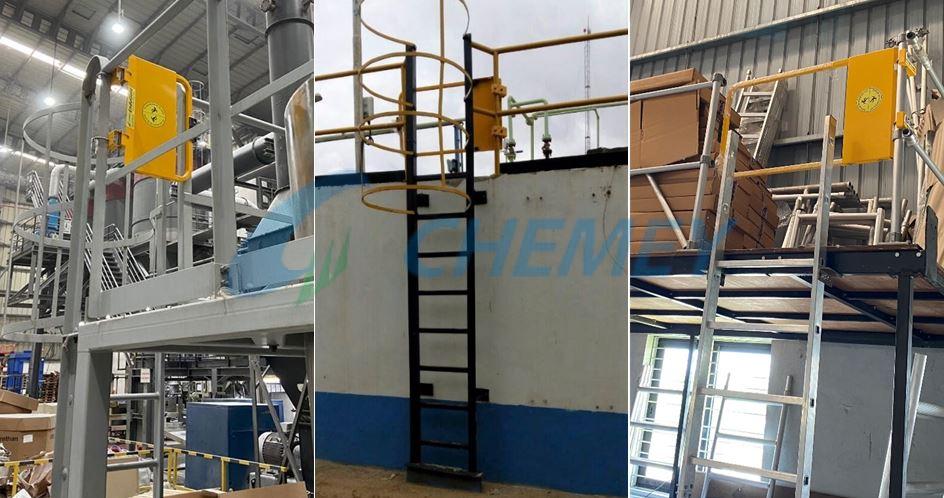
Ladders are essential in any workplace facility that uses elevated work planes, storage areas, and walkways to maximize the usable space of the facility. Most ladders used for this purpose are fixed ladders. They are permanently attached to a mezzanine, catwalk, part of the equipment, or the building itself. To comply with OSHA fall protection guidelines, there are several steps you can take to protect workers utilizing fixed ladders. Anytime workers have to climb a fixed ladder, especially when also carrying tools, equipment, or other items, there’s a risk of falls. They must be protected from falling into a ladderway employing a self-closing safety swing gate, ladder safety gates, or guardrail offset to guide employees away from the dangerincluding installing an integrated ladder safety system, providing fall arrest systems, and maintaining fixed ladders properly. OSHA 1910.23 (d) insists following for Fixed Laddersused anywhere in your facility: Ladder steps or rungs must be evenly spaced, so workers aren’t exposed to undo fall risk. Steps or Rungs must have a non-slip surface to protect employees. Fixed ladders must be strong enough to handle their maximum intended load without failing. You must keep ladder steps or rungs clear of debris and other fall hazards. Specific OSHA Fall Protection Device Requirements for Fixed Ladders A few things you should know about Fixed Ladder Fall Protection Equipment:You understand that there are serious fall hazards associated with the fixed ladders in your facility. You also need to be very careful to follow the standards for the fall protection equipment you choose which include : Ladder Safety System Ladder climbing safety systems are permanent vertical lifeline systems, that can be comprised of cable or rail. Eachfixed ladder is equipped with a ladder climbing safety system, all components must meet OSHA 1910.29(i) requirements. The ladder climbing safety system should be inspected before use and periodically based on the manufacturer’s requirements. Any worn, damaged, or otherwise, defective equipment should be taken out of service immediately. Personal Fall Arrest System This type of system is designed to stop a fall and absorb the energy before the worker comes into contact with a lower level. A typical personal fall protectionequipment consists of a full-body harness, connectors, and anchorage. It’s also imperative that the system is inspected before use regularly based on the manufacturer’s requirements, for any signs of damage or wear. Any piece of equipment that fails inspection or has been impacted, shall be removed from service immediately. Ladder Safety Gates Protecting the entrance of a ladderway is key to preventing falls in your facility. One way to do this is with swing gates that attach to the guardrail system used to protect the elevated surface the ladder leads to. A self-closing gate is a preferred method of protecting ladder entrances in most facilities. Ladder safety gates and other types of the self-closing gate must meet the general requirements per OSHA 1910.29.Whether you’re running a busy warehouse or a manufacturing facility, you need to take full advantage of every square inch of space you have. That means elevated platforms, mezzanines, catwalks, and other work areas. While you may have guardrails installed around the perimeter, your workers still need access to the space, and it’s up to you to keep them safe as they climb those fixed ladders. Fixed Ladder Fall Protection Begins with Training No matter how many Industrial safety swing gates or other safety devices you install or provide, mistakes can still lead to falls. That’s why it’s vital that you provide adequate fall prevention training for incoming employees as well as ongoing training for all members of your organization. For fixed ladders, it’s important to teach workers to: Always face the ladder. Maintain three points of contact whenever climbing a ladder. Inspect rungs or steps before use for signs of dampness or anything slippery. Inspect the fall arrest system or ladder safety system for signs of damage. Properly secure the body harness, lanyard, and lifeline, Enter and exit the ladder entrance through a self-closing swing gate- Chemey EnduGate Never over-extend/stretch yourself to the side of the ladder. Do not carry loads that can cause a loss of balance on a fixed ladder. Government authorities are very strict when it comes to requiring employers to compliance standards and regulations. However, they’re not inclined to give specific advice about which safety device or system you should use in a given situation. For that, you need a qualified safety expert like the specialists at Chemey. We’ve been a leading manufacturer of passive fall protection products, specializing in safety gates, Pallet Safety Gates for more than 5 years. Put our safety equipment expertise and industry experience to work for you to protect your employees from fall hazards in your facility and maintain your compliance. Need help? We have a team of professionals that can help you sort through each of these questions to find the right solution for you. Follow US On Facebook | Instagram | Linkedin | Twitter
Fall Protection: Safety Gate Applications
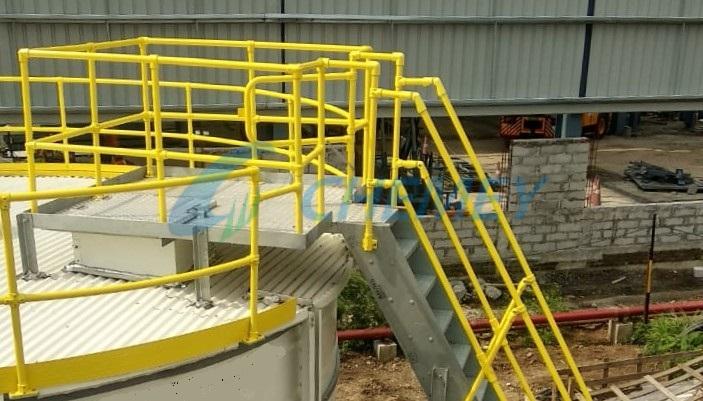
A common cause of industry injuries and fatalities is falls according to OSHA. Because falls are a common cause of injury and death, providing fall protection is important. One consideration for OSHA compliant fall protection is the use of safety gate fall protection. Fall protection safety gates are useful in minimizing fall risks and preventing workplace accidents. To avoid employee injuries and fatalities in the workplace, here are three key safety gate fall protection installation areas: (1) Handrail or Guard Rail openings or Roof Access PointsSelf-closing safety gates are used at entryways through safety guard railings or installation into railings which surround equipment or machinery. Safety gates allow access yet provide fall protection. A self-closing gate protects access points to a roof. The safety gate fall protection systems are useful for ladder openings, stairs, walkway access, catwalks, and transition points to a different level roof. (2) Ladder Safety GatesProtecting the entrance of a ladderway is key to preventing falls in your facility. One way to do this is with single side openable swing gates that attach to the guardrail system used to protect the elevated surface the ladder leads to. In fact, a self-closing gate is the preferred method of protecting ladder entrances in most facilities. Ladder safety gates and other types of self-closing gate must meet the general requirements per OSHA 1910.29. (3) Mezzanines or Other Industry Platforms: Pallet safety gateCertainly, protecting personnel working above and working below a mezzanine must be done without impeding the loading area. A mezzanine safety gate allows access to move materials and yet provide safe restriction to the loading area.Pallet gates open from the outside and allows pallets and other items to enter the mezzanine or platform with a forklift. Are Safety Gates Required by OSHA? OSHA’s new rule (November 2016) on walking-working surfaces and fall protection, OSHA states, “OSHA believes that double chains do not fully protect workers from falls at hole entrances, and therefore, is adopting the existing and proposed requirements that entrances to ladderway floor and platform holes have a self-closing gate or be offset to prevent workers from falling.” Therefore, according to OSHA, a gate is required at the top of all ladders. Below is the new OSHA code reflecting this requirement: 1910.28(b)(3)(iv) – Each employee is protected from falling into a ladderway floor hole or ladderway platform hole by a guardrail system and toe boards erected on all exposed sides, except at the entrance to the hole, where a self-closing gate or an offset must be used. EnduGate safety gates meet and exceed OSHA regulations for fall protection. Preventing falls by using safety gates is beneficial to your bottom line. If you have questions about safety gate fall protection systems, please reach out to us.