
Industrial Access Point Safety: How Self-Closing Safety Gates Prevent Falls at Elevated Work Areas
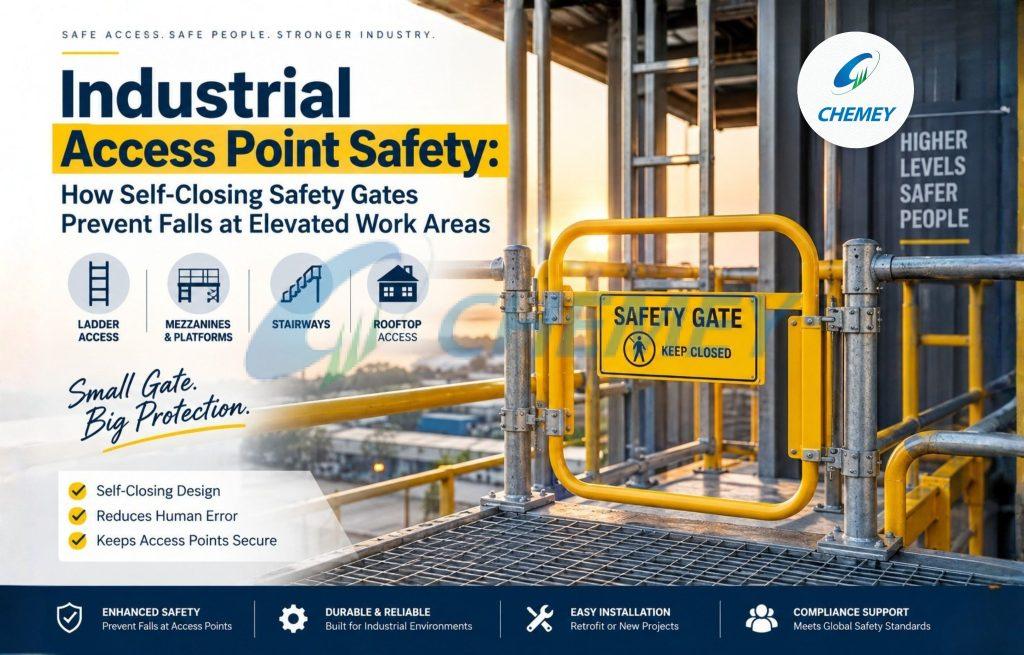
Industrial facilities are designed to move people, equipment and materials efficiently. But every access point between different levels can also introduce a fall hazard. Ladders, mezzanines, platforms, elevated walkways, rooftop access points and maintenance areas often require workers to pass through openings in otherwise protected guardrail systems. This creates an important engineering question: “How can workers safely enter and exit an elevated area without leaving a permanent gap in fall protection?” A properly specified self-closing industrial safety gate can provide a practical form of passive fall protection at these access points. Unlike chains, removable bars or manually operated barriers, a self-closing gate is designed to return to the closed position after a person passes through. What Is an Industrial Safety Gate? An industrial safety gate is a protective gate installed at an opening in a guardrail, platform, ladderway, walkway or other elevated access area. Its primary purpose is to maintain protection while still allowing authorized personnel to move through the access point. Common applications include:• Fixed ladder access• Stairway openings• Mezzanine platforms• Elevated work platforms• Rooftop access• Maintenance platforms• Industrial walkways• Machinery access areas• Restricted areas The gate becomes part of the overall access-protection system rather than simply functioning as a physical door. Why Are Access Points a Critical Fall-Protection Risk? A continuous guardrail can protect an exposed edge effectively—but an opening is still required wherever people need to enter or exit. For example:Guardrail → Access Opening → Ladder → Lower Level If the access opening is left unprotected, a worker approaching the ladder may be exposed to a fall hazard. This is why access-point protection needs to be considered as part of the complete fall-protection design. Self-Closing Safety Gates vs Manual Barriers One of the biggest advantages of a self-closing gate is that it helps reduce dependence on worker memory. Consider a conventional access opening protected by:• A chain• Removable pipe• Manual barrier• Swinging bar• Temporary barricade A worker may move the barrier and forget to replace it. That creates a new exposure. A self-closing gate is designed to return to its closed position automatically. Simple safety principle:Open for access → Worker passes → Gate returns to closed position. Where Should Industrial Safety Gates Be Used? 1. Fixed Ladder AccessFixed ladders are common in manufacturing plants, warehouses, rooftops, process plants, utility areas and industrial maintenance zones. 2. Mezzanine PlatformsMezzanines provide valuable additional floor space in warehouses and manufacturing facilities. Their exposed edges and access points require appropriate protection. 3. Elevated Work PlatformsMaintenance and production equipment often requires workers to operate from elevated platforms. Access openings may occur at stair entrances, ladder transitions, equipment access points and maintenance walkways. 4. Rooftop Access PointsIndustrial rooftops increasingly contain HVAC equipment, solar installations, exhaust systems, electrical equipment and communication systems. Workers may need regular access for inspection and maintenance. 5. Industrial Walkways and PlatformsIndustrial walkways often connect different operating areas. Where a walkway terminates at an elevated platform or equipment access point, a properly designed gate can help control movement and maintain protection. What Are the Benefits of Self-Closing Safety Gates? 1. Passive Fall ProtectionA self-closing gate provides protection without requiring the worker to manually replace a barrier after every passage. 2. Reduced Human-Error RiskA self-closing mechanism is designed to return to the protected position automatically. 3. Easy InstallationModular safety gates can be designed for quick installation using suitable clamping or mounting arrangements. 4. Retrofit FriendlyIndustrial facilities often need to improve existing access points without replacing the entire guardrail system. Modular gates can be useful for plant upgrades and retrofit projects. 5. CustomizableImportant factors can include opening width, mounting arrangement, gate height, pipe diameter, guardrail configuration, material and environmental conditions. Safety Gate vs Guardrail: What’s the Difference? A guardrail primarily protects an exposed edge or boundary. A safety gate protects an opening within or adjacent to a guardrail while allowing controlled passage. Therefore, they are not normally competing products. They work together. Guardrail = protects the edgeSafety gate = protects the access opening This integrated approach creates a more continuous fall-protection system. Safety Gate vs Chain or Removable Barrier For frequently used access points, a permanently installed self-closing gate can offer operational advantages over temporary or manually replaced barriers. Key comparison:• Automatic closing: Self-closing gate — Yes, chain/removable barrier — usually no• Continuous protection: Self-closing gate — better suited, chain/removable barrier — depends on user behaviour• Frequent access: Self-closing gate — suitable, chain/removable barrier — can become inconvenient• Human-error dependency: Self-closing gate — lower, chain/removable barrier — higher• Retrofit potential: Both can be retrofit depending on application The correct choice should always be based on the specific hazard, applicable regulations and facility operating conditions. How to Choose the Right Industrial Safety Gate Before specifying a safety gate, engineers and safety managers should evaluate several factors. 1. Measure the Clear OpeningMeasure the rail-to-rail clear opening where the gate will be installed. 2. Identify the Access TypeDetermine whether the gate is protecting ladder access, stair access, platform opening, rooftop access, walkway, machinery access or a restricted area. 3. Check the Existing GuardrailConsider post diameter, post shape, guardrail height, available mounting space, opening width and gate swing direction. 4. Consider the EnvironmentIndustrial environments can expose equipment to moisture, UV radiation, chemicals, dust, salt air and temperature changes. Material and finish should be selected according to the operating environment. Engineering and Compliance Considerations Safety gates should never be selected simply because they physically fit an opening. The complete system should be evaluated against relevant regulations and engineering requirements. Requirements vary by country, facility type and application, so project teams should verify the applicable local regulations and standards before specification. Compliance should be evaluated for the complete application—not just the gate itself. The guardrail, gate, opening, platform, ladder and access arrangement should work together as one safety system. Why Passive Protection Matters in Modern Industrial Safety Modern safety engineering increasingly considers human factors alongside mechanical performance. Workers may be under time pressure, carrying tools, performing repetitive maintenance, working in poor weather, moving between multiple access points or
Safety Gates vs Guardrails: Which Protection System Fits Your Facility?
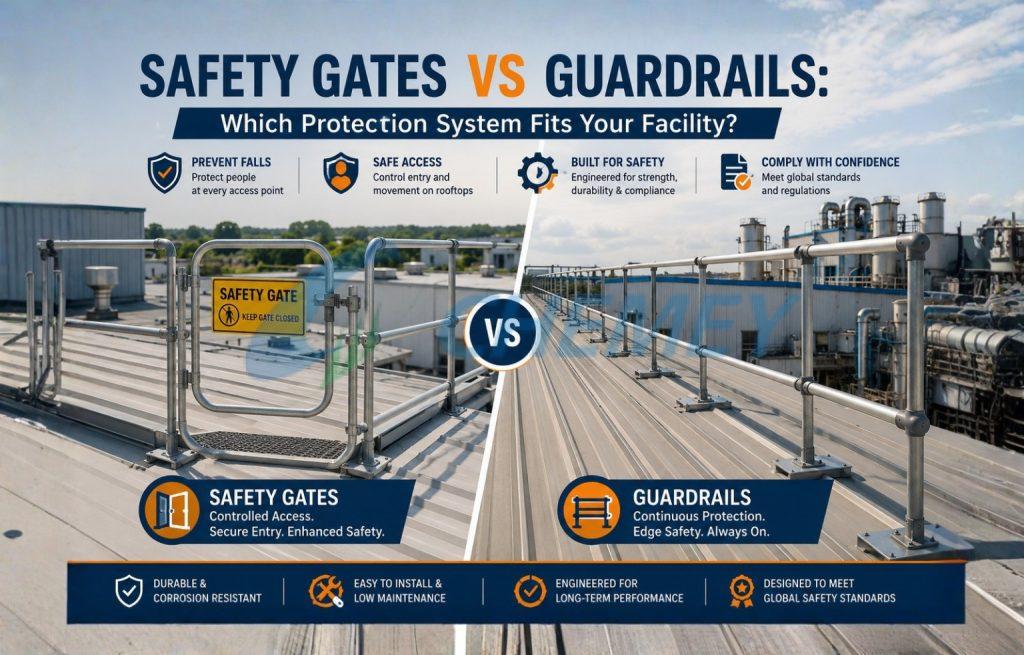
Workplace falls remain one of the leading causes of serious injuries in warehouses, manufacturing plants, distribution centers, rooftops, mezzanines, and elevated work areas. When selecting the right fall protection system, facility managers often compare safety gates vs guardrails to determine the most effective solution for improving workplace safety and supporting OSHA compliance. The right choice depends on your facility’s layout, access requirements, and fall hazards. While both industrial safety gates and guardrail systems are essential components of modern fall protection solutions, they serve different functions. Understanding how each system works can help businesses reduce risks, improve worker safety, and maintain compliance across high-risk environments. What Are Guardrail Systems? Guardrail systems are permanent or modular safety barriers installed along exposed edges, rooftops, elevated walkways, mezzanines, loading platforms, and maintenance areas. Their primary purpose is to prevent workers from entering hazardous fall zones and provide continuous edge protection. One of the biggest advantages of industrial guardrails is that they provide passive fall protection, meaning workers remain protected without relying on personal protective equipment or active intervention. This makes guardrail systems one of the most effective and widely adopted workplace fall prevention solutions. Best Applications for Guardrail Systems Rooftop guardrail systems Elevated walkways Loading docks and loading platforms Mezzanines Industrial access platforms Equipment maintenance areas Guardrail systems are ideal when continuous perimeter protection is required across large elevated work areas. What Are Industrial Safety Gates? Industrial safety gates are self-closing safety barriers designed to secure access points where guardrails must be interrupted. They are commonly installed at ladder openings, roof hatch access points, stairway entrances, elevated platform entry points, and maintenance zones. Unlike fixed guardrails, self-closing safety gates allow controlled worker access while automatically returning to a closed position after use. This ensures continuous access point protection and significantly reduces the risk of falls caused by human error. Best Applications for Industrial Safety Gates Ladder safety gates Roof hatch openings Stairway access points Equipment maintenance zones Restricted-access platforms Elevated platform entrances Modern industrial safety gates help facilities strengthen fall prevention strategies while maintaining safe and efficient movement throughout the workplace. Safety Gates vs Guardrails: Key Differences Feature Guardrail Systems Industrial Safety Gates Primary Purpose Continuous edge protection Securing access openings Installation Area Rooftops, platforms, walkways, mezzanines Ladders, roof hatches, stairways, entry points Worker Interaction No action required Opens and closes during access Protection Type Passive fall protection Controlled access protection OSHA Compliance Support High High Which System Is Better for Workplace Fall Protection? When evaluating safety gates vs guardrails, the answer is not choosing one over the other. The most effective industrial fall protection strategy combines both systems. Guardrail systems protect workers from exposed edges on rooftops, platforms, and elevated walkways, while industrial safety gates secure access openings where employees enter or exit protected areas. Facilities that rely only on guardrails may leave ladder openings and roof hatches exposed. Similarly, safety gates alone cannot provide continuous protection along rooftop perimeters or elevated workspaces. For comprehensive OSHA fall protection compliance, businesses typically achieve the highest level of protection by integrating guardrail systems and safety gates into a single workplace safety solution. How to Choose Between Safety Gates and Guardrails During a facility safety assessment, consider the following questions: Do employees work near exposed rooftop edges or elevated platforms? Are ladder access points or roof hatch openings present? Is maintenance regularly performed at height? Do you require permanent edge protection or controlled access protection? Are you looking to improve OSHA compliance and reduce workplace fall hazards? If the answer is yes to multiple questions, combining rooftop guardrail systems and self-closing safety gates is often the most effective approach for reducing fall risks and improving workplace safety. Conclusion Industrial fall protection systems play a critical role in preventing falls, improving rooftop safety, and supporting workplace compliance. Rooftop guardrail systems, rooftop walkway systems, self-closing safety gates, and access platforms provide effective protection for workers operating at height while improving maintenance efficiency and operational performance. Chemey is a trusted provider of industrial fall protection systems and rooftop safety solutions, delivering innovative products such as EnduRail® safety railings, rooftop walkway systems, self-closing safety gates, and customized access platforms. With a focus on workplace safety, durability, and engineering excellence, Chemey helps organizations create safer, more productive work environments. Contact Chemey today to find the right rooftop fall protection solution for your facility. FAQs What is the difference between safety gates and guardrails? Guardrail systems provide continuous edge protection along rooftops, walkways, and elevated platforms, while industrial safety gates secure access openings such as ladders, roof hatches, and platform entry points. Are safety gates required with guardrail systems? In many industrial facilities, safety gates are installed wherever a guardrail opening is necessary to maintain continuous fall protection and access point safety. Where should industrial safety gates be installed? Industrial safety gates are commonly installed at ladder access points, rooftop hatches, stairways, elevated platforms, and maintenance access areas. Do guardrail systems require worker training? Although guardrail systems provide passive fall protection, workers should still receive training on workplace safety procedures, hazard recognition, and fall prevention practices. Can safety gates and guardrails be used together? Yes. Combining industrial safety gates and guardrail systems creates a comprehensive fall protection solution that improves access point protection, workplace safety, and OSHA compliance across industrial environments.
The Importance of Safety Gates in Enhancing Workplace Safety
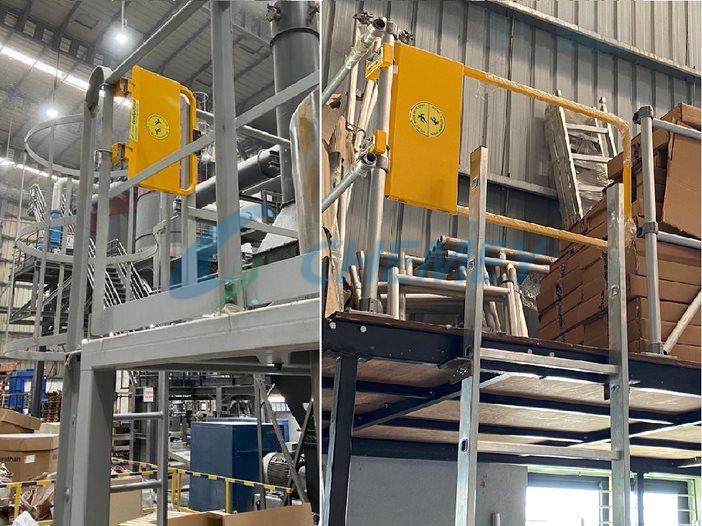
Safety gates are a crucial component of any workplace safety plan, as they can help prevent accidents, injuries, and fatalities. In this blog post, we will discuss the importance of safety gates, the different types of gates available, and how they can enhance workplace safety. Importance of Safety Gates Industrial swing gates are an effective and easy-to-install passive fall protection solution for a variety of industrial and commercial settings. Safety gates provide a barrier that prevents unauthorized access to restricted areas, machinery, and equipment. They can also help prevent falls from elevated areas and provide protection from hazardous materials. Safety gates are an essential component of any safety plan, as they can help prevent workplace accidents, injuries, and fatalities. They are also a cost-effective way to comply with safety regulations and standards. Here are some benefits you can expect from implementing industrial swing gates in your facility in different work areas: ROOFTOP SAFETY Workers who spend time on the roof completing tasks or doing inspections should be able to do so without the unneeded risk of injury or death. Installing Industrial swing gates is the best way to mitigate the risk of rooftop accidents occurring. An industrial swing gate should be used on all rooftop entrances for two reasons: One, they provide workers with an added layer of fall protection when entering and exiting the building. And two, they give authorized staff peace of mind that they can work to the best of their ability without the risk of falling unprotected. WALK AREA PROTECTION Industrial safety gates are the ideal solution for creating safe walking areas throughout your location. Many times, industrial buildings are filled with hurried activity. There’s a good chance that vehicles will be transporting materials, heavy machinery will be running and large amounts of material will be moving from place to place. Workers will need to be able to walk through the facility safely; gates can be used to create a designated walking path. The safety gates will keep the walkway protected from problems that could arise due to vulnerability. MAKE LADDER OPENINGS SAFE Ladders can be used in a variety of workplace settings to help complete important tasks, but can create some additional height risks for your employees. Consider investing in industrial safety gates for all ladder openings. When not in use, your ladders will remain secure. Installing industrial swing gates will simply add that extra layer of protection for your workers. GUARD YOUR ASSETS It’s not unusual for businesses to install swing gates for property protection. Industrial equipment and machinery are expensive and big investments that could affect the future of a company. All steps should be taken in an effort to keep these assets safe from damage. Swing gates can be used to prevent access by keeping all of your expensive equipment protected from incidentals or unauthorized usage. These gates can also be used to keep people from getting too close to dangerous machines. EXTRA PROTECTION FOR INDUSTRIAL ELEVATORS Safety gates are very effective with heavy-duty elevator use. Most elevators used in a warehouse or factory will be much longer than your standard consumer elevator. Due to the increased possibility of danger when riding inside of an open-air elevator, it is best to install safety gates to add that extra level of protection. This will greatly reduce the chance of an employee falling out and getting hurt. TYPES OF SAFETY GATESThere are several types of safety gates available, each designed to fit specific applications and needs. Chemey provides a range of safety gates, including: INDUSTRIAL SAFETY GATESIndustrial safety gates are designed for heavy-duty applications and can withstand harsh environments and extreme weather conditions. They can be custom-built to fit specific applications and can provide safe access to restricted areas, machinery, and equipment. Universal Safety Swing Gate Safety swing gates are an excellent solution for providing safe access to elevated areas, machinery, and equipment. They can be installed on stairs and other elevated platforms and can swing on one side to provide a clear pathway for employees.EnduGate self-closing gates are designed to provide an extra layer of safety by automatically closing behind employees as they pass through. They can prevent unauthorized access to restricted areas and provide protection from falls or restrict approach to Hazardous situations. It is available in 25 mm Square pipe structure with the ability to fix on any type of post up to 50 mm size. Adjustable Torsion Spring Gate This is similar to Universal Safety Spring Gate and is designed to provide an extra layer of safety by automatically closing behind employees as they pass through and having a mechanism for controlling the reversal speed. It is available in two pipe sizes – 33 and 42 mm OD pipes. The Spring is checked for 50000 cycles of repeated opening and closing operation as per BS 6375-2:2009. PALLET SAFETY GATE Pallet safety gates are designed to provide safe access to loading docks and other elevated areas where pallets are loaded and unloaded. They can prevent falls from elevated areas and protect hazardous materials. ENHANCING WORKPLACE SAFETY Safety gates are a crucial component of any workplace safety plan. They can help prevent accidents, injuries, and fatalities by providing a barrier that prevents unauthorized access to restricted areas, machinery, and equipment. They can also protect hazardous materials and prevent falls from elevated areas. By investing in safety gates, businesses can ensure that their employees work in a safe and secure environment. The benefits of safety gates will go further than just preventing accidents. It’s common for properly installed safety gates to actually increase productivity in the workplace. Employees who work in an environment that is properly equipped with safety gates have more freedom and confidence when completing tasks. In conclusion, safety gates are an essential component of any workplace safety plan. Chemey provides a range of safety gates, including industrial safety gates & pallet safety gates, that can be customized to fit specific applications and needs. By investing in safety gates, businesses
Areas where Industrial Safety Gates are Needed
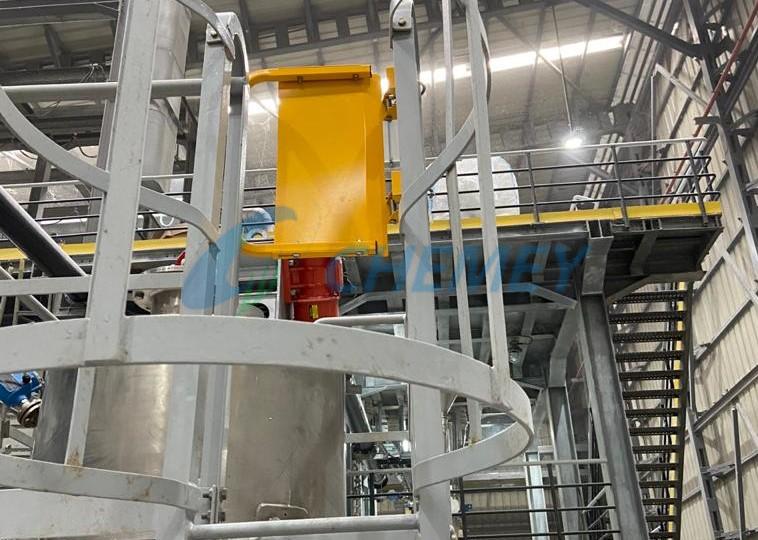
You need to provide total protection for the sake of the person who is working at heights. Industrial self-closing safety gates are a measure of fall protection or barrier protection that protect an area of movement. Here are two areas where an industrial safety gate will help to protect people from fall / injury. Ladder Openings Workers in industries like manufacturing, chemical processing, and construction need safe work environments, but job sites often require them to traverse ladders and raised platforms. Whether on a rooftop or an elevated working platform, a ladder requires a gap in the guardrail that is protecting an edge. Leaving a ladder opening unprotected is leaving the job of fall protection half done. Industrial safety gates are made to attach to the railing or ladder structure so that the gap in the railing is closed with a spring loaded self-closing gate. Pedestrian Walking Areas There are a variety of hazards that employees face when working on a loading dock or in plants where there are motorised vehicles and pedestrians working together. Safe walking areas are often demarcated by the railing. To provide the safest possible environment, the pedestrian needs to know when they are entering and exiting a safe walking area. Industrial self-closing safety gates help to provide an additional level of awareness when exiting and entering a safe walking area. EnduGate self-closing safety gate does not require any human interaction to open or close, but it stays closed when someone is not using it. It also fills in any railing gaps you may have and keeps your job site up to OSHA standards. You also do not have to worry about the barrier staying open when it isn’t supposed to be. It functions as a guardrail when it’s not in use. This minimizes errors and the potential for accidents, fall or injury. EnduGate come preassembled in multiple sizes and finishes, and you can affix them to round or square posts of varying thickness. Reach out to our sales team to understand range of self-closing gates and mounting hinges. We’ll be happy to help you find the right solution for your needs.
Preventing Falls From Height – Spring Loaded Safety Gates
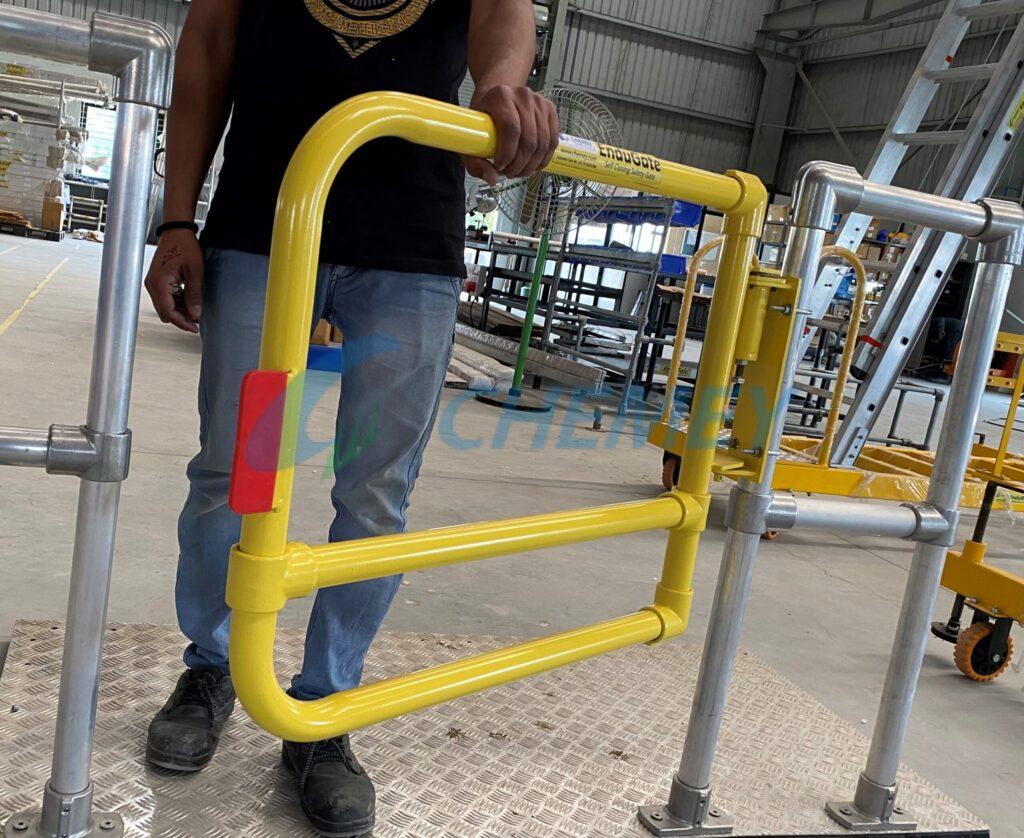
If a ladder is being used to access the machinery or monitoring platforms, then a safety solution needs to be in place. Customers are in search of solutions, where and how this form of protection should be taken care of in a work environment. Breaks in railing systems areas have tended to be protected by chains or bars, but the problem with this method is that they are completely reliant on the person remembering to replace the chain or bar once they’ve passed through. If the safety component is not replaced the area will be left exposed, which could mean someone falling from a platform or gaining unauthorized access to a restricted area Spring-loaded safety gates, or industrial safety gates as they are sometimes referred to, are an ideal solution to protecting open voids such as on a platform, mezzanine floor, and machinery stairways or for providing safe access and egress to demarcated areas within factories, warehouses, and loading bays. Chemey range of self-closing safety gate overcome the risk of human error that’s associated with chains and sliding tubes as they automatically close behind the user, overcoming the risk of human error to eliminate such risk of injury. Safety must always be a priority. In addition to being a simple and extremely effective way of ensuring safety that isn’t reliant on the user, spring-loaded safety gates help you to follow HSE guidelines and comply with current legislation such as BS EN 14122 Parts 3 and 4. BS EN 14122 states that gates on handrails must close automatically when released and that if an access point is required along a guard rail, there must be a self-closing gate.