
Safety Gates vs Guardrails: Which Protection System Fits Your Facility?
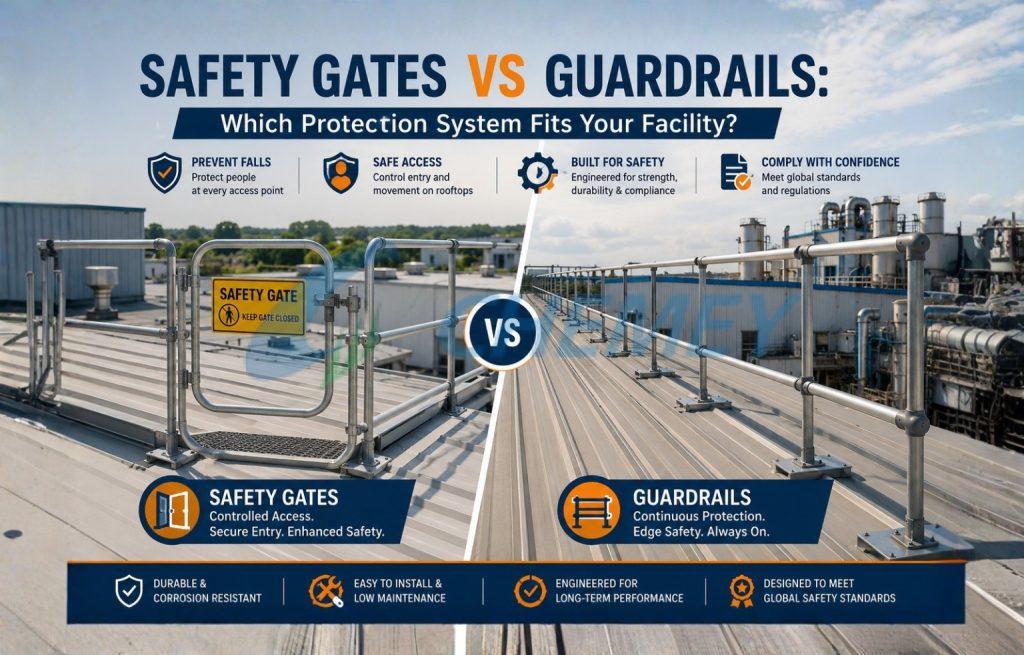
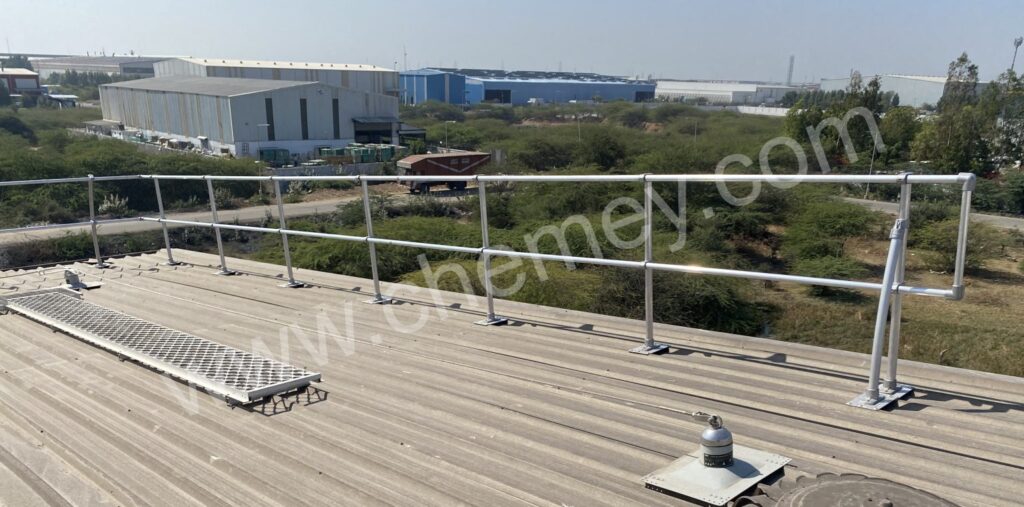
Workplace falls remain one of the leading causes of serious injuries in warehouses, manufacturing plants, distribution centers, rooftops, mezzanines, and elevated work areas. When selecting the right fall protection system, facility managers often compare safety gates vs guardrails to determine the most effective solution for improving workplace safety and supporting OSHA compliance. The right choice depends on your facility’s layout, access requirements, and fall hazards. While both industrial safety gates and guardrail systems are essential components of modern fall protection solutions, they serve different functions. Understanding how each system works can help businesses reduce risks, improve worker safety, and maintain compliance across high-risk environments. What Are Guardrail Systems? Guardrail systems are permanent or modular safety barriers installed along exposed edges, rooftops, elevated walkways, mezzanines, loading platforms, and maintenance areas. Their primary purpose is to prevent workers from entering hazardous fall zones and provide continuous edge protection. One of the biggest advantages of industrial guardrails is that they provide passive fall protection, meaning workers remain protected without relying on personal protective equipment or active intervention. This makes guardrail systems one of the most effective and widely adopted workplace fall prevention solutions. Best Applications for Guardrail Systems Rooftop guardrail systems Elevated walkways Loading docks and loading platforms Mezzanines Industrial access platforms Equipment maintenance areas Guardrail systems are ideal when continuous perimeter protection is required across large elevated work areas. What Are Industrial Safety Gates? Industrial safety gates are self-closing safety barriers designed to secure access points where guardrails must be interrupted. They are commonly installed at ladder openings, roof hatch access points, stairway entrances, elevated platform entry points, and maintenance zones. Unlike fixed guardrails, self-closing safety gates allow controlled worker access while automatically returning to a closed position after use. This ensures continuous access point protection and significantly reduces the risk of falls caused by human error. Best Applications for Industrial Safety Gates Ladder safety gates Roof hatch openings Stairway access points Equipment maintenance zones Restricted-access platforms Elevated platform entrances Modern industrial safety gates help facilities strengthen fall prevention strategies while maintaining safe and efficient movement throughout the workplace. Safety Gates vs Guardrails: Key Differences Feature Guardrail Systems Industrial Safety Gates Primary Purpose Continuous edge protection Securing access openings Installation Area Rooftops, platforms, walkways, mezzanines Ladders, roof hatches, stairways, entry points Worker Interaction No action required Opens and closes during access Protection Type Passive fall protection Controlled access protection OSHA Compliance Support High High Which System Is Better for Workplace Fall Protection? When evaluating safety gates vs guardrails, the answer is not choosing one over the other. The most effective industrial fall protection strategy combines both systems. Guardrail systems protect workers from exposed edges on rooftops, platforms, and elevated walkways, while industrial safety gates secure access openings where employees enter or exit protected areas. Facilities that rely only on guardrails may leave ladder openings and roof hatches exposed. Similarly, safety gates alone cannot provide continuous protection along rooftop perimeters or elevated workspaces. For comprehensive OSHA fall protection compliance, businesses typically achieve the highest level of protection by integrating guardrail systems and safety gates into a single workplace safety solution. How to Choose Between Safety Gates and Guardrails During a facility safety assessment, consider the following questions: Do employees work near exposed rooftop edges or elevated platforms? Are ladder access points or roof hatch openings present? Is maintenance regularly performed at height? Do you require permanent edge protection or controlled access protection? Are you looking to improve OSHA compliance and reduce workplace fall hazards? If the answer is yes to multiple questions, combining rooftop guardrail systems and self-closing safety gates is often the most effective approach for reducing fall risks and improving workplace safety. Conclusion Industrial fall protection systems play a critical role in preventing falls, improving rooftop safety, and supporting workplace compliance. Rooftop guardrail systems, rooftop walkway systems, self-closing safety gates, and access platforms provide effective protection for workers operating at height while improving maintenance efficiency and operational performance. Chemey is a trusted provider of industrial fall protection systems and rooftop safety solutions, delivering innovative products such as EnduRail® safety railings, rooftop walkway systems, self-closing safety gates, and customized access platforms. With a focus on workplace safety, durability, and engineering excellence, Chemey helps organizations create safer, more productive work environments. Contact Chemey today to find the right rooftop fall protection solution for your facility. FAQs What is the difference between safety gates and guardrails? Guardrail systems provide continuous edge protection along rooftops, walkways, and elevated platforms, while industrial safety gates secure access openings such as ladders, roof hatches, and platform entry points. Are safety gates required with guardrail systems? In many industrial facilities, safety gates are installed wherever a guardrail opening is necessary to maintain continuous fall protection and access point safety. Where should industrial safety gates be installed? Industrial safety gates are commonly installed at ladder access points, rooftop hatches, stairways, elevated platforms, and maintenance access areas. Do guardrail systems require worker training? Although guardrail systems provide passive fall protection, workers should still receive training on workplace safety procedures, hazard recognition, and fall prevention practices. Can safety gates and guardrails be used together? Yes. Combining industrial safety gates and guardrail systems creates a comprehensive fall protection solution that improves access point protection, workplace safety, and OSHA compliance across industrial environments.
Beyond Edge Protection: Engineering Safe RooftopWalkways for Industrial & PEB Facilities
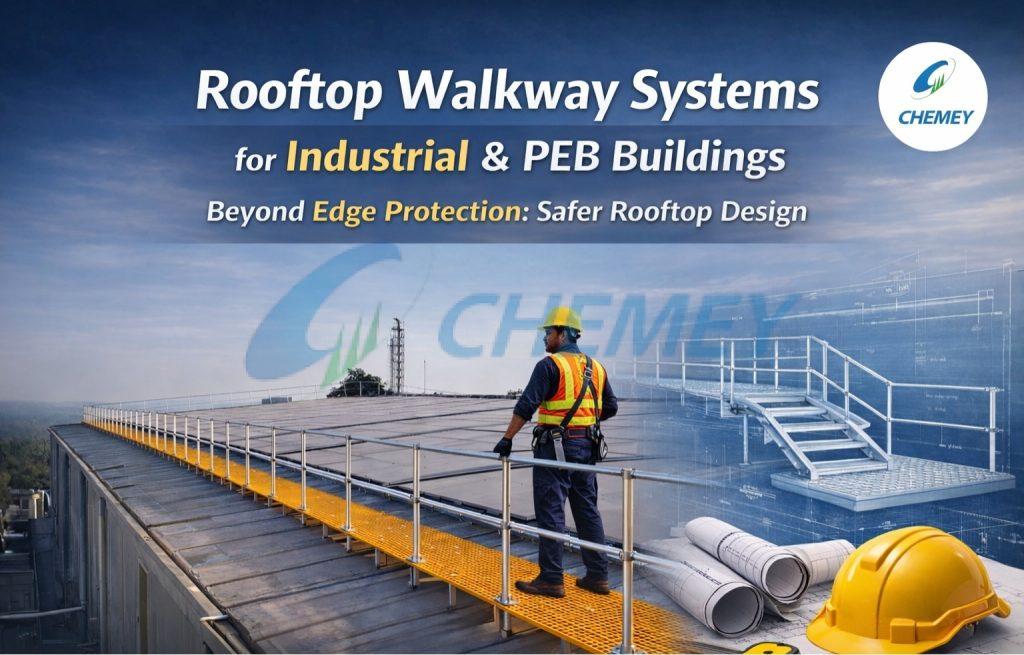
In rooftop safety discussions, fall protection is often limited to edge protection systems such as lifelines or guardrails. However, real operational risks rarely occur only at the roof perimeter. Modern industrial rooftops — especially Pre-Engineered Buildings (PEB), warehouses, data centers, and process plants — require maintenance personnel to move safely across the roof, not just near its edges. A safe rooftop is therefore not defined only by protection at boundaries, but by controlled and engineered movement pathways. This is where rooftop walkways become a critical design element. 1. The Missing Link in Rooftop Safety Design Many facilities provide: Edge guardrailsbut overlook: Safe walking routes between equipment. Common site observations include: Maintenance staff walking directly on roof sheets Unpredictable movement paths Damage to roofing panels Increased slip and trip hazards Unsafe shortcuts near edges Without defined pathways, even compliant fall protection systems fail to address operational risk. 2. Engineering Purpose of Rooftop Walkways Rooftop walkways are not merely access platforms — they serve multiple engineering functions: Load Distribution : Walkways distribute point loads from personnel and tools, preventing deformation of roof sheets. Movement Control : They guide maintenance teams along predetermined safe routes. Slip Resistance : Designed surfaces improve traction during dust, moisture, or monsoon conditions. Equipment Accessibility : Allows safe approach to HVAC units, solar panels, exhaust systems, and inspection zones. 3. Integration with Guardrail Systems The most effective rooftop safety strategy combines: Edge protection (guardrails) Defined walkways Crossover platforms Controlled access points Together, these create a passive safety ecosystem where workers naturally remain within protected zones. Consultants increasingly adopt this integrated approach because it reduces reliance on PPE-based safety procedures. 4. Design Considerations for Consultants When evaluating rooftop walkway systems, engineers should consider: Roof Type Compatibility Industrial Troughed sheet roofs Standing seam systems Concrete slabs Structural Fixing Method Non-penetrative or minimal penetration solutions Waterproofing integrity Environmental Durability Corrosion resistance UV exposure Industrial chemical environments Maintenance Workflow Mapping Walkways should follow actual equipment servicing routes — not geometric layouts. Future Expansion Provision for additional equipment installation and pathway extension. 5. Operational Benefits Often Overlooked Facility operators report significant improvements after installing engineered walkways: Faster maintenance execution Reduced roof damage Lower safety supervision requirements Improved compliance audits Better worker confidence These benefits often justify walkway integration during initial design rather than retrofit. 6. Consultant Recommendation During early design stages, rooftop safety evaluation should include: Where will maintenance personnel walk? How frequently will equipment be accessed? Are pathways naturally guiding safe behavior? Can safety function without procedural enforcement? Designing walkways together with guardrail systems transforms rooftop safety from compliance-driven to engineering-driven. Conclusion Edge protection prevents falls — but engineered walkways prevent unsafe movement. As rooftop equipment density continues to increase, consultants play a key role in designing rooftops that are safe, maintainable, and operationally efficient throughout the facility lifecycle.
Rooftop Modular Guardrail Systems: A Smart Safety Solution for Industrial Facilities
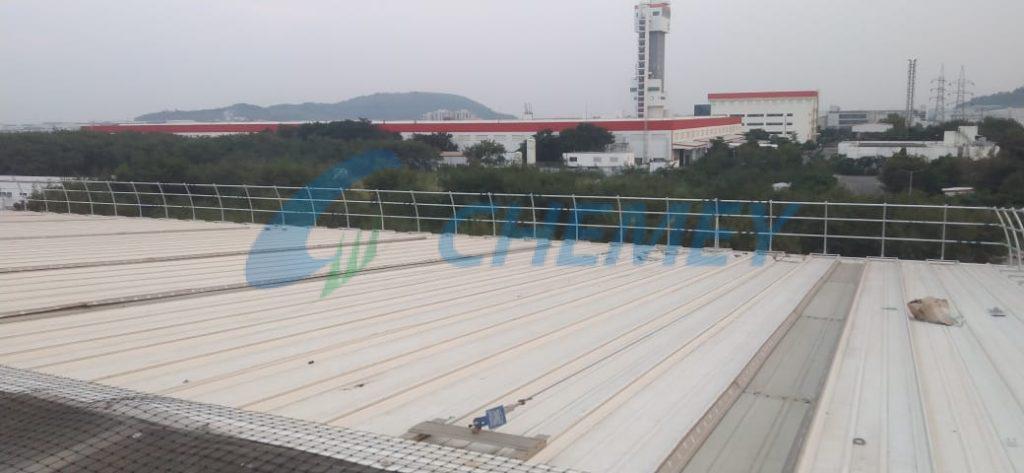
Rooftop Modular Guardrail Systems: Enhancing Industrial Safety & Compliance Rooftop areas in industrial facilities are often overlooked when it comes to safety planning. However, maintenance activities, inspections, and equipment servicing make rooftops high-risk zones. Installing a rooftop modular guardrail system is one of the most effective ways to ensure fall protection, regulatory compliance, and long-term operational safety. This blog explores why modular guardrail systems are becoming the preferred choice for industrial rooftops and how they deliver superior safety compared to conventional railing solutions. Why Rooftop Edge Protection Is Critical Industrial rooftops pose serious fall hazards, especially where there is: Frequent movement of maintenance personnel Equipment installations near roof edges Absence of permanent edge protection Safety consultants and regulatory bodies increasingly mandate edge protection systems to reduce workplace accidents and ensure compliance with occupational safety norms. Limitations of Conventional Rooftop Railings Traditional welded or fabricated guardrails often fail to meet long-term rooftop safety requirements due to: Poor corrosion resistance in outdoor environments Inconsistent welding quality Difficult modifications during plant expansion High maintenance costs over time On-site hot work increasing safety risks during installation These limitations have led industries to adopt modular guardrail systems as a more reliable alternative. What Is a Modular Rooftop Guardrail System? A modular guardrail system is a pre-engineered, non-weld safety solution designed for quick installation and long-term durability on rooftops. Key Characteristics: Precision-engineered components Non-welded construction for uniform quality Designed for outdoor exposure Easily configurable and expandable This system ensures consistent safety performance across all rooftop areas. Key Benefits of Modular Guardrail Systems Superior Corrosion ResistanceManufactured using high-quality GI pipes and aluminum fittings, modular guardrails are ideal for harsh rooftop environments. Faster InstallationPre-engineered components eliminate on-site fabrication, reducing installation time and site disruption. Compliance with Safety StandardsModular systems are designed to meet consultant-approved load and height requirements, ensuring regulatory compliance. Low Maintenance & Long Service LifeNon-welded construction minimizes rust points, lowering maintenance costs over the system’s lifespan. Future-Ready DesignModular layouts allow easy modification, relocation, or expansion without dismantling the entire system. Applications of Rooftop Modular Guardrails Manufacturing plants Electrical and engineering facilities Warehouses and logistics centers PEB structures Commercial and industrial rooftops Any facility with rooftop access can significantly reduce fall risks with a properly designed modular guardrail system. Choosing the Right Rooftop Safety Partner Selecting the right supplier is as important as choosing the right system. A reliable partner ensures: Engineering-backed designs Consultant-aligned safety compliance Quality-controlled materials Professional installation support Companies like Chemey Mechatronics LLP specialize in delivering standardized, compliant, and durable rooftop safety solutions tailored to industrial requirements. Conclusion Rooftop safety is no longer optional—it is a critical component of modern industrial infrastructure. Modular rooftop guardrail systems offer a smart, efficient, and future-proof solution to protect personnel, ensure compliance, and reduce long-term maintenance costs. Investing in the right edge protection system today helps industries create safer workplaces for tomorrow. Chemey Mechatronics LLP – Your Complete Rooftop & Access Safety Solutions For more information, call +91 9099033719 or send an e-mail to contact@chemey.com
Fall Hazard Risk Assessment matrix for Access Point, Unprotected Skylight & Unprotected edges
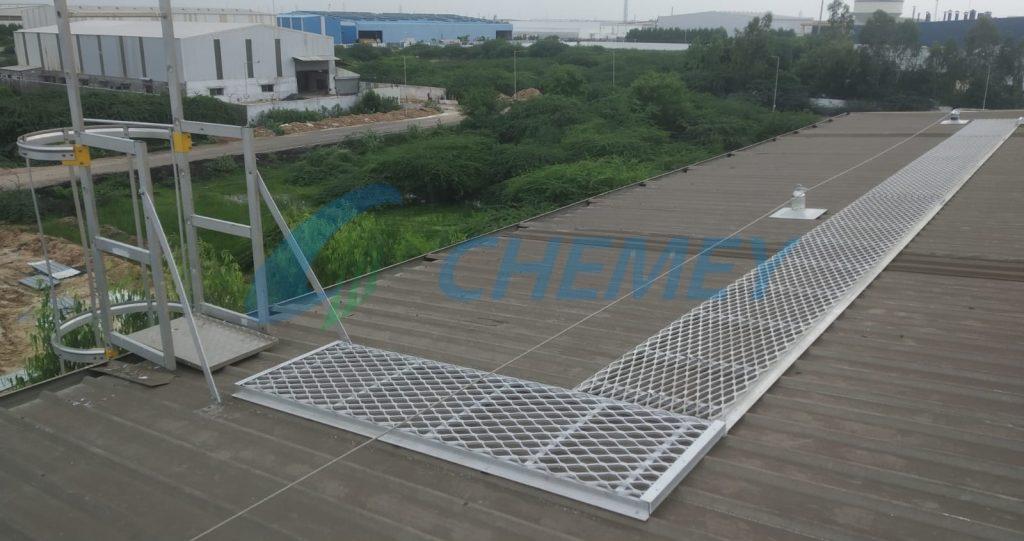
A Risk Assessment Matrix is a tool used to assess the likelihood and severity of potential hazards in a workplace and can be used to determine appropriate risk control measures. When applied to the three areas of fall hazards as per OSHA (access points, unprotected skylights, and unprotected edges of buildings), a risk assessment matrix can help employers identify and prioritize the risks associated with these hazards and determine appropriate control measures. Here’s an example of how a risk assessment matrix could be applied to the three areas of fall hazards: Risk Assessment Matrix OSHA Clause – 1910.28(b)(13) Work on low-slope roofs Risk Assessment is based on 2 factors. Severity of consequences – How life-threatening is it? Likelihood – frequencyof exposure. Risk = Severity of consequences X Likelihood One should prioritize Risk Assessment based on the critical danger and how frequently workers are exposed to that area. Access Points: Likelihood of occurrence: High Severity of consequences: High Control measures: Employers should implement guardrails, safety nets, or personal fall arrest systems to prevent falls from access points. Unprotected Skylights: Likelihood of occurrence: Low to Moderate Severity of consequences: High Control measures: Employers should cover or guard skylights with a screen or railing that can withstand a force of at least 90 kgs applied at any point. Unprotected Edges of Buildings: Likelihood of occurrence: High Severity of consequences: High Control measures: Employers should provide guardrails, safety nets, or personal fall arrest systems for workers who are exposed to falls from unprotected edges of buildings. Guardrails should be capable of withstanding a force of at least 90 Kgs applied at any point. In conclusion, a risk assessment matrix can help employers identify and prioritize the risks associated with fall hazards in the workplace and determine appropriate control measures for each hazard. By implementing engineering controls like proper Access Platforms, Walkways, Guardrails, and Skylight Covers employers can help prevent falls and protect the safety and health of their workers. Workers should be trained on the use of equipment and emergency response in the event of a fall. Employers should regularly inspect and maintain equipment to ensure it is in good working condition. Would you like to know more about emerging technologies and trending solutions for fall protection when working at heights? Or Do you need a custom quote? For more information, call +91 9099033719 or send an e-mail to contact@chemey.com
Fall Hazard Risk Assessment matrix
For Access Point, Unprotected Skylight, and Unprotected edges A Risk Assessment Matrix is a tool used to assess the likelihood and severity of potential hazards in a workplace and can be used to determine appropriate risk control measures. When applied to the three areas of fall hazards as per OSHA (access points, unprotected skylights, and unprotected edges of buildings), a risk assessment matrix can help employers identify and prioritize the risks associated with these hazards and determine appropriate control measures. Here’s an example of how a risk assessment matrix could be applied to the three areas of fall hazards : Risk Assessment Matrix OSHA Clause – 1910.28(b)(13) Work on low-slope roofs Risk Assessment is based on 2 factors. Severity of consequences – How life-threatening is it? Likelihood – frequency of exposure. Risk = Severity of consequences X Likelihood One should prioritize Risk Assessment based on the critical danger and how frequently workers are exposed to that area. Access Points: Likelihood of occurrence: High Severity of consequences: High Control measures: Employers should implement guardrails, safety nets, or personal fall arrest systems to prevent falls from access points. Unprotected Skylights: Likelihood of occurrence: Low to Moderate Severity of consequences: High Control measures: Employers should cover or guard skylights with a screen or railing that can withstand a force of at least 90 kgs applied at any point. Unprotected Edges of Buildings: Likelihood of occurrence: High Severity of consequences: High Control measures: Employers should provide guardrails, safety nets, or personal fall arrest systems for workers who are exposed to falls from unprotected edges of buildings. Guardrails should be capable of withstanding a force of at least 90 Kgs applied at any point. In conclusion, a risk assessment matrix can help employers identify and prioritize the risks associated with fall hazards in the workplace and determine appropriate control measures for each hazard. By implementing engineering controls like proper Access Platforms, Walkways, Guardrails, and Skylight Covers employers can help prevent falls and protect the safety and health of their workers. Workers should be trained on the use of equipment and emergency response in the event of a fall. Employers should regularly inspect and maintain equipment to ensure it is in good working condition. Would you like to know more about emerging technologies and trending solutions for fall protection when working at heights? Or Do you need a custom quote? For more information, call +91 9099033719 or send an e-mail to contact@chemey.com Follow us on Facebook | Instagram | Linkedin | Twitter
Hazard Overview – Industrial Roof
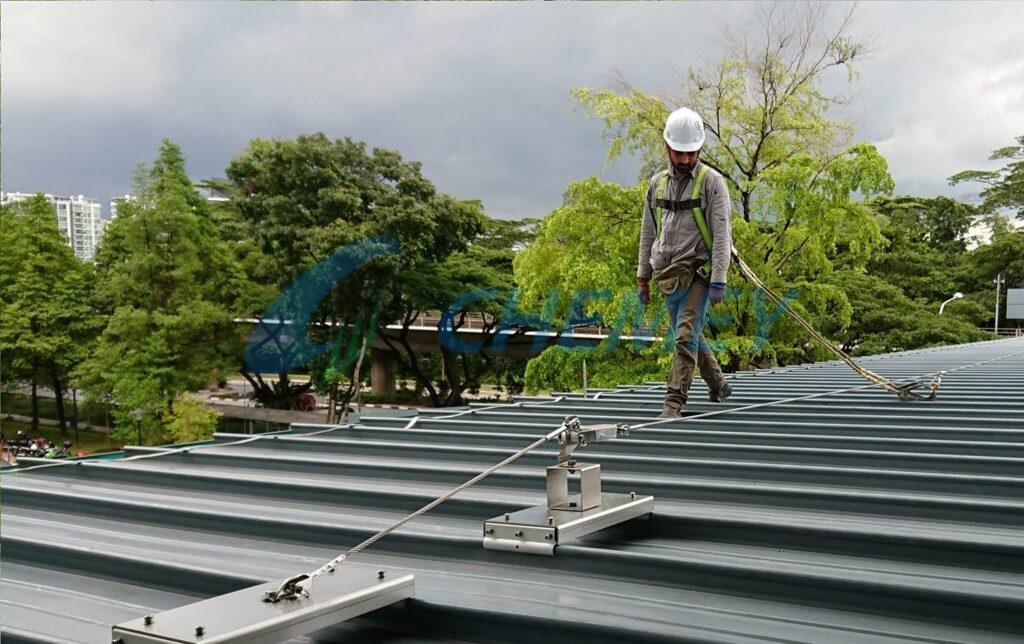
Fall hazards are one of the leading causes of workplace injuries and fatalities in the World. As per OSHA (Occupational Safety and Health Administration, USA), falls from elevated surfaces such as roofs, skylights, and unprotected edges of buildings are considered significant hazards. Here’s an overview of OSHA’s guidelines for fall protection measures related to access points, unprotected skylights, and unprotected edges of buildings: Access Points: Access points are locations where workers must climb to gain access to elevated work areas such as roofs, mezzanines, or platforms. OSHA requires that employers provide guardrails, safety nets, or personal fall arrest systems for workers who are exposed to falls of six feet or more. Employers must also ensure that access points are designed and maintained to prevent falls, including providing stable and secure ladders, scaffolds, safety gates and stairways. Unprotected Skylights: Skylights are a common feature of many roofs and provide natural light to interior spaces. However, unprotected skylights can pose a fall hazard to workers who may accidentally step on them or fall through them. Standards require that employers cover or guard skylights with a screen or a railing that can withstand a force of at least 90 kg applied at any point. Employers must also ensure that workers are trained to recognize and avoid the hazard posed by unprotected skylights. Unprotected Edges of Buildings: Unprotected edges of buildings such as roofs, edges, and balconies can pose a significant fall hazard to workers who are performing work or walking near them. OSHA requires that employers provide guardrails, safety nets, or personal fall arrest systems for workers who are exposed to falls of six feet or more. Employers must also ensure that guardrails are capable of withstanding a force of at least 200 pounds applied at any point and are designed to prevent workers from falling off the edge of a building. In summary, the law requires employers to provide appropriate fall protection measures for workers who are exposed to fall hazards such as access points, unprotected skylights, and unprotected edges of buildings. Employers must ensure that these hazards are identified, assessed, and addressed through the implementation of engineering controls, administrative controls, and/or the use of personal protective equipment. Employers must also ensure that workers are trained to recognize and avoid fall hazards and that equipment is properly maintained and inspected. CHEMEY is a trusted leader in fall safety solutions for the Industrial, logistics and manufacturing industry. Our dedicated team is here to help you tackle all areas where fall protection equipment can assist in making your workplace safer. We provide the highest level of quality and reliability in both products and guidance. Contact us today to learn more about how we can positively impact safety in your industry. Need help? Our team of professionals can guide you to find the ideal solution. We are there for you 24/7! Just call us on +91 79-26420786, +91 9099033711, +91 79-26427686 or email us: contact@chemey.com Follow us on Facebook | Instagram | Linkedin | Twitter
Enhancing Workplace Safety with EnduRail Railing – A Customizable Handrail Solutions
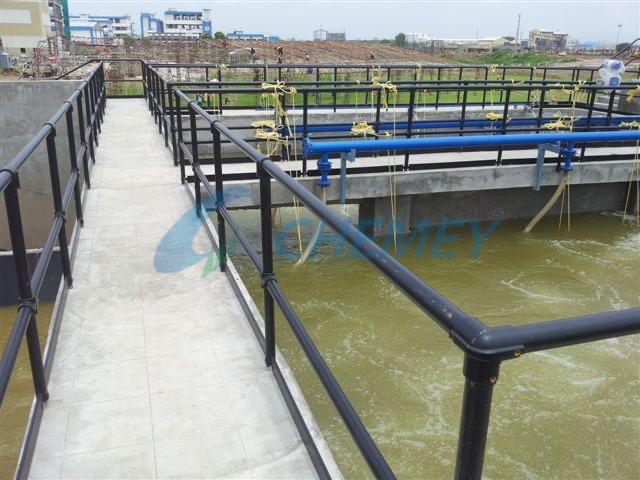
Creating a safe work environment is critical to the success of any business. Unfortunately, some companies choose the wrong products when it comes to implementing safety protocols. That’s where Chemey comes in. Our EnduRail Railing – Customizable handrail solutions are designed with ease of use, keeping its modularity. Our products do not require welding, making them easy to configure and assemble. With EnduRail, you can have peace of mind knowing that your workplace is safe and secure. We will discuss the importance of handrails and guardrails in the workplace and how EnduRail railing solutions can enhance workplace safety. Guardrails are an essential component of workplace safety. They are designed to provide a barrier between workers and hazardous areas. Guardrails can be used in various settings, including construction sites, manufacturing facilities, and warehouses. EnduRail railing is a leading brand of guardrails that provides maximum safety and security for workers with an aesthetic look and inbuilt safety. The EnduRail system is made of high-quality Aluminium alloys that are durable and require little or no maintenance. It is also customizable to fit the specific needs of different workplace areas, making it an ideal choice for companies looking to enhance their safety protocols. Handrails are another crucial component of workplace safety. They provide additional support for workers, especially in areas where there are stairs or elevated platforms. Customizable handrail solutions allow companies to create handrails that are tailored to their specific needs. For example, handrails can be designed to fit around machinery or to provide support for workers with disabilities. Handrails are also made of high-grade Aluminium alloy that can withstand saline and other corrosive environments, ensuring long-term safety for workers. When it comes to workplace safety, there is no one-size-fits-all solution. Every workplace is unique, and safety protocols must be customized to fit the specific needs of each workplace. This is where customizable handrail solutions come in. EnduRail can provide handrail solutions that are tailored to the needs of different industries and workplaces. EnduRail modular handrail solutions allow companies to create handrails that are safe, effective, and fit seamlessly into their work environment. In conclusion, handrails and guardrails are essential components of workplace safety. EnduRail railing and customizable handrail solutions are options that can enhance workplace safety by providing maximum protection for workers. By prioritizing workplace safety and investing in Endurail Modular safety solutions, companies can not only prevent accidents and injuries but also improve productivity and employee morale with the lowest lifecycle cost of capital investment. Need help? Our team of professionals can guide you to find the ideal solution. We are there for you 24/7! Just call us on +91 79-26420786, +91 9099033711, +91 79-26427686 or email us: contact@chemey.com Follow US On Facebook | Instagram | Linkedin | Twitter
Make Sure Your Workplace Is Up To OSHA Compliance on Fall Safety
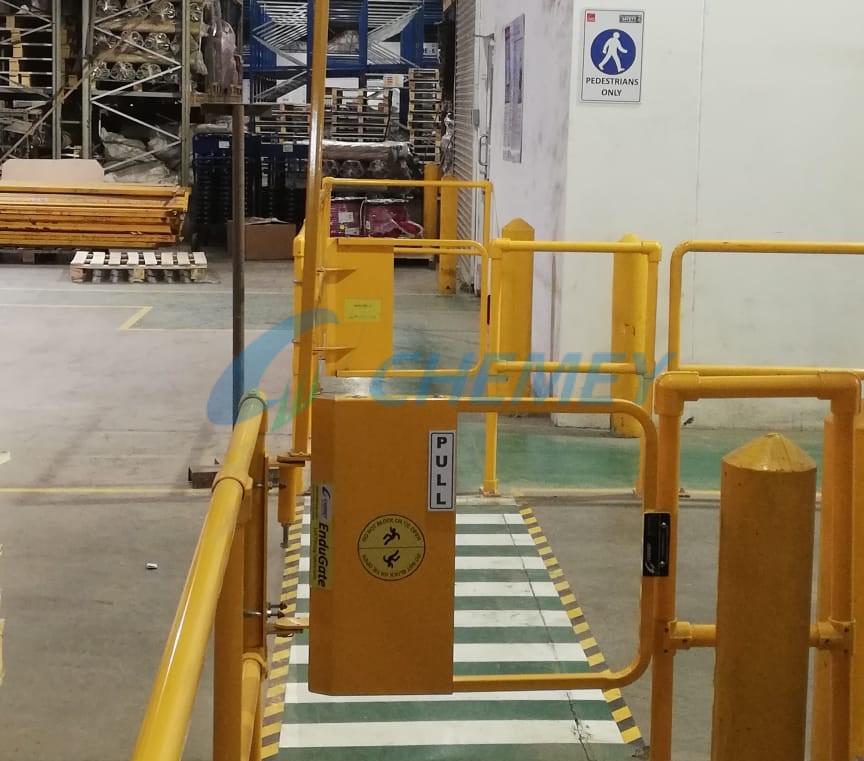
The effects of the COVID-19 pandemic impacted every industry. Now that the economy has seen a significant rebound, manufacturing and oil & gas production are in full swing again. Safety measures are critical now more than ever, and particularly those pertaining to fall safety. While addressing the danger of falls is critical in all workplaces, it’s a particular concern in chemical, oil/gas refinery, cement, and many other heavy manufacturing facilities. Continuous process facilities are bustling, structurally complex, and full of hazards subject to a variety of Safety regulatory requirements. There is dangerous equipment on-site, regular shipping and receiving through busy loading docks, and many elevated areas where fall risks are more present. WHAT MAKES FALL SAFETY SO IMPORTANT? Every accident has many consequences, the most important being that no employer wants to see workers hurt. Lack of safety compliance mean a potential work shutdown, and lost profits. Every slip, trip, and fall adds up to millions of lost workdays in a year. The independent survey estimates that about 20 percent of worker injuries in industry are due to slips, trips, and falls. Proactively creating and supporting a culture of safety in your workforce is vital, but simply reminding workers to watch their step is not enough. Fall protection equipment, including specialized pieces such as an adjustable safety gate or swing gate, is essential for ensuring worker safety and keeping production moving. To help you to understand and implement proper fall protection, let’s examine the top fall risk areas in industry/refinery facilities, then consider if your company has fully addressed each of those risks. AREAS OF FALL RISKS IN WORKPLACES A Manufacturing industry/ Refinery includes several important areas which present fall hazards. Regulations do not always specify which equipment you are required to use in each situation. But OSHA guidelines provide requirements that the gates and other equipment you choose must meet in each area: LADDERSLadders, either portable or affixed, are a common fall safety risk which OSHA addresses under 1910.23 – Walking-working Surfaces: Ladders. Each employer must look at situations where ladders are being used and identify the fall hazard associated with it. For example, fall protection is usually not required for a step ladder, but it will be if that step ladder is used on an elevated platform or in an area adjacent to an unprotected edge. Fixed ladders, like those commonly used in oil refineries, also need fall protection, like guardrails fitted with an industrial safety swing gate to provide access control and fall safety. ROOFTOPS AND ROOF ACCESS AREAS Workers may need to access your rooftop for maintenance, cleaning, or to perform work on rooftop machinery. Skylights, roof edges, and even stairways require protection to properly manage rooftop access. The railing and safety swing gate that protect each of these areas must have a height of 1050mm (plus or minus 75 mm) from the walking/working surface that they’re installed on. They must be capable of withstanding 90 kg of downward force upon the top rail without failure. They also require a smooth-finished surface that can’t snag worker’s skin, clothing, or equipment. You should also look at options which are non-penetrating, allowing you to place well-anchored gates and railings without damaging the integrity of your rooftops. LOADING DOCKSLoading docks are another busy area in a manufacturing plants / oil & gas refinery, and thus, another fall safety hazard. Fall protection for a loading dock usually comes in the form of a self-closing, adjustable loading dock safety gate system and thorough training of personnel, ensuring risk mitigation at a busy dock. The height and strength requirements for railings and gates in loading dock areas are the same as those for rooftop areas (see above). STAIRWAYSWhen a door or a gate opens on a stairway, there is a platform and the gate’s swing doesn’t interfere with workers on the stairs. An outdoor or indoor swing gate is ideal for this situation. Stairs must also be kept well-lit, dry, and free of debris, allowing maximum safety to workers as they move between the levels of your manufacturing/processing areas. MEZZANINESThe extra storage space created by these elevated platforms is extremely useful in many facilities, but they also present falling hazards. The same strong railing and safety gate requirements for roofs apply to mezzanines, and toe boards may also be required to help prevent small objects from falling into work areas below. Specialized pallet safety gate made for mezzanine use are your best option for access to these areas MACHINERY GUARDINGSafety swing gates are a great tool for controlling access and preventing falls around or onto the potentially dangerous machinery in your facility. They can also help keep unauthorized personnel out of restricted processing areas, improving plant security and protecting trade secrets. WHY SAFETY GATES MATTER The right safety gates will help employees, visitors, and contractors within your facilities to perform their function without fall and safely access the areas they need to. As outlined above, your facility has many areas with potential fall hazards, and the right Industrial safety gate choice can make the difference between being ready for a return to full production without struggling with safety problems. WHY SAFETY GATES ARE SUCH AN IMPORTANT SAFETY CONSIDERATION Simply put, Safety Swing Gates are the simplest, most effectively way to safely control access to the many areas in your facility, and to protect personnel from the fall risks they may encounter in each area. OSHA compliant safety gates keep workers safe on elevated areas and at the openings of stairways, ladders, mezzanines, and loading docks. There are many different types of OSHA-compliant gates with a specific purpose. Self-closing safety gates are passive fall protection, designed to automatically close every time the gate swings open. There is no risk of a worker forgetting to close the gate behind them. The equipment offers nearly continuous protection from leading edges. These gates are easy to mount in various positions and on handrails of all sizes. CHOOSING A GOOD SAFETY PARTNER Your worker
How to Make the Right Choice When Buying or Installing Guardrail?
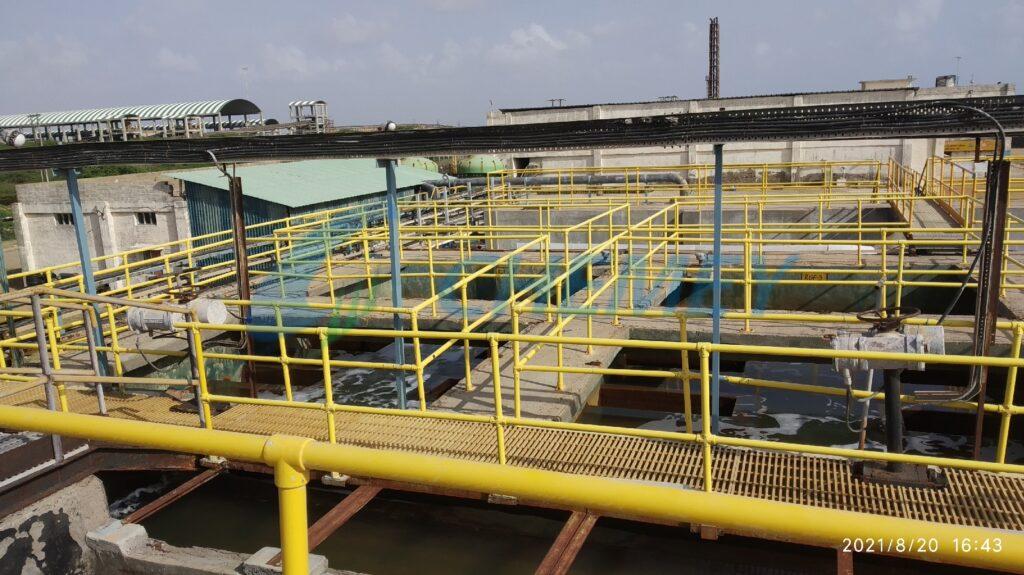
What do you do when you need something? You Google it right! When you need a guardrail, selecting the suitable barrier requires more involvement than initially expected. It can be overwhelming with so many options. You find out that there are so many options available. GI, SS, FRP Aluminum, Welded, Non-penetrating, … The possibilities go on. With all of this in front of you, how do you make the right choice? You should consider many points and features available while you make this decision. 1. What is the application of the guardrail?2. Where do you need the guardrail?3. how long do you need the guardrail to last?4. What codes apply to your guardrails?5. How fast do you need the guardrail to install?6. How do you want the guardrail to look? We’ll review each area you should consider while making this decision. 1. What is the application of the guardrail? It’s a simple question but an important one. There are a few factors that will change the type of guardrail that you need.If you need the industrial guardrail for protection, then you need to make sure that the guardrail meets the standards applicable to you, like BIS, OSHA, or EN. The type of protection you need would also change the guardrail you want. We suggest using a 40 NB Structural Fittings based modular pipe guardrail for fall protection. However, the size and code will change if you want a more robust barrier system to protect people from forklift traffic. If you need to use it as a warning line, then the requirements are easier to manage by light duty handrail. Then it would help if you considered whether the guardrail would be temporary or permanent. For example, if you plan on taking the guardrail down when the work is done, then you want to focus on temporary guardrails like a parapet clamp guardrail or temporary guardrail. On the other hand, if you wish for the guardrail to remain in place so that the working or walking surface is always protected, then you want a system designed to stay in place. 2. Where is the guardrail going? The most common locations that we see are STP, ETP, WTP, Industrial Buildings perimeter, Solar rooftop, and machine guarding. Other potential sites include a mezzanine, a dock, or inside a warehouse. Each location has its own set of considerations that would change the guardrail you choose. Weather plays a role in the system that you choose. Saline and water-rich areas, corrosive gas fumes, snow, and heavy rain will corrode the material if you don’t choose carefully. If you live in a windy area, you’ll want to ensure that any system is designed to meet your local requirements. Ensure that you take this into account so that you don’t have a guardrail flying off your structure, damaging equipment, or, more importantly, putting lives at risk. The roof material will influence how you want to mount a guardrail. If you have a roof warranty, you don’t want to lose it by poking holes in the roof. If you don’t have a roof warranty, then you don’t want to exasperate potential roof leaks by poking holes in the roof. A complete modular aluminum lightweight guardrail constructed from tube clamp fittings is an ideal solution. 3. How long do you need the guardrail to last? You may think this is a meaningless question, but I see the answer to this is ignored more often than you realize. A cheaper short-term solution will cost less initially, but when you consider money, energy, and time spent on maintenance and replacing that mean stuff, it becomes more costly. Guardrail is not immune to this problem. Some options are temporary and used for permanent solutions because they are cheaper. However, those savings come at a cost. Powder-coated steel will not last as long as galvanized steel, and you will have to replace the railing sooner than you expect. Welding has pros and cons as well. The weld points will be an area of accelerated corrosion despite galvanization. Aluminum and SS 316 do not rust and provide a better life in a humid and corrosive environment. If you only need it for a year or two, then buying a lower-quality option may make sense. However, if you want something that will protect people long, you need to stop and ask yourself if the option you’re considering will do just that. 4. What codes apply to your guardrail? We found a lack of understanding, most often in this area. We noticed in India IS 4912 code is ancient and needs updating as per OSHA or EN code. They talk about a lot and set the minimum safety standard that employers must provide. For rooftops, we do not have any set standards. Edge protection and safety in roof work require an area of consideration. Check your local regulations and company standard to select the correct guardrail.You might have a presumption that welded railing only offers good strength. Still, proven evidence is that EnduRail built from Structural Fittings and slip-on pipe fittings, has surpassed the load requirement of OSHA and EN standards if configured correctly. 5. How fast do you need the guardrail to install? Installing guardrails is part of project management. Procurement and execution both involve proper detailing. Mild steel welded guardrail needs site welding, grinding, and post-fabrication sandblasting and painting. All are time-consuming and skilled staff requirement jobs. Prefabricated GI railing management is not easy. You have to consider volume management and transit damages. If a small part needs modification or procurement, the handover process will get delayed and, in turn, project. A modular aluminum guardrail system is easy to procure, manage and install without a skilled workforce. Procure structural fittings and pipes in pre-coated finish and start the installation as the project progresses. On-site modification and dismantling are also easy if required. 6. How do you want the guardrail to look? Why does the look of the guardrail matter if safety is the only important thing?
Basics of Fall Protection Rules
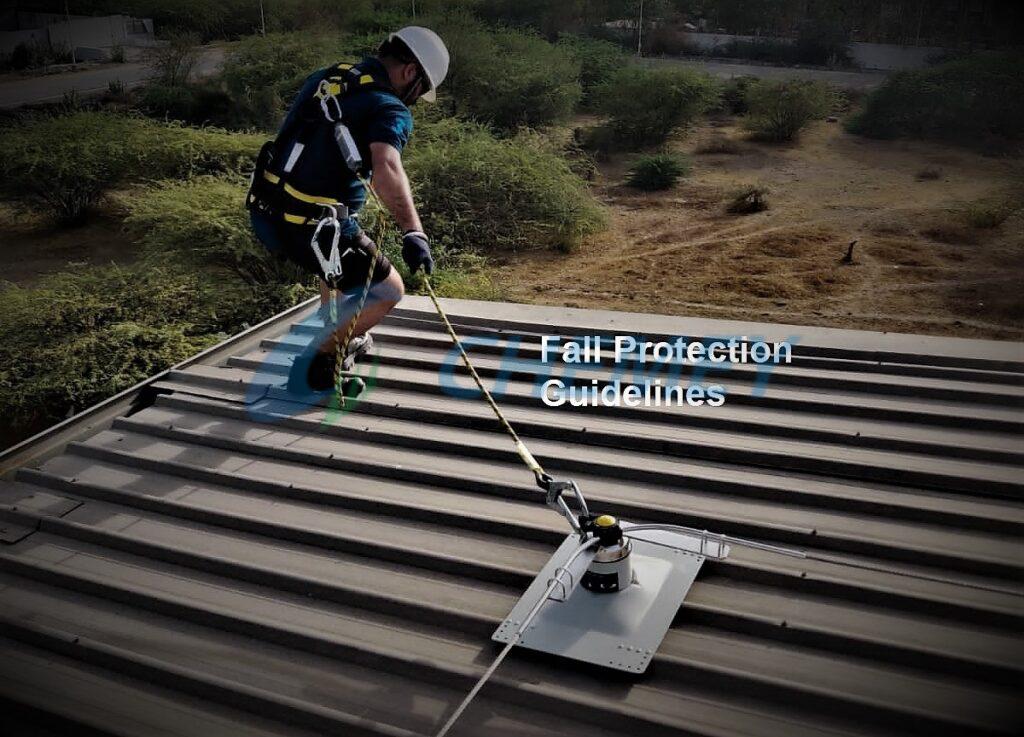
With falls being one of the most common causes of workplace injuries and deaths, workers who work at heights must understand the basics of fall protection. Being proactive by implementing compliant methods of fall protection and fall prevention can save lives and prevent injuries. Consequently, it is important to be aware of basic fall protection rules and facts. Here are some basic fall protection facts to consider. (1) Identify Fall Hazards Falls occur due to various reasons including losing balance, tripping, losing a grip on support, stepping backward, strong winds or dangerous weather, stepping into a hole, support moving or breaking, and irregular or damaged work surfaces. Employers can be proactive in reducing workplace injuries and deaths by identifying and eliminating fall hazards and installing fall protection systems. Further, employers can educate workers to follow safe practices, properly use equipment, and be proactive and aware of fall hazards. (2) Utilize Fall Protection Systems Three categories of fall protection systems include fall prevention, fall restraint, and Fall arrest. Fall Prevention A fall prevention system aims to prevent falls from occurring by using guardrails and barriers. Consider guardrail systems such as non-penetrating guardrail systems, permanent rail systems, and customized guardrail solutions. Barrier considerations include industrial safety gates, skylights, and warning lines. Fall Restraint A fall restraint system stops workers from falling by using a tether that restrains a worker’s range of motion. The worker is not allowed to move far enough to reach a leading edge. Fall Arrest A general fall arrest system is a net or cushion system beneath a working area. A personal fall arrest system is composed of an anchorage connector, body wear, and connecting device. Such a system allows a worker to fall a short distance before stopping their fall. (3) Comply with OSHA Guidelines OSHA provides information about how to protect workers from falls, such as using guardrails, safety gates, personal fall protection systems,mobile work platforms, Aluminum mobile scaffolds, adopting safe work practices, and providing appropriate training. In some situations, protection is provided by “limiting the number of workers exposed” to falls by using warning lines, designated areas, and control zones. Further, OSHA guidelines include the following fall safety practices: Protection is required for workers in construction sites when working above six feet above a lower level and for workers in the general industry when working above four feet above a lower level. Fall protection systems are required to prevent workers from falling into or onto hazardous machines or other equipment regardless of the fall distance. Providing workplace conditions free from known dangers and establishing fall protection systems before work begins. Providing personal protective equipment to workers at no cost to them. Training workers about workplace hazards in a language that they can understand. As you prepare for or review your fall protection program, keep these basic fall protection regulations in mind. While the employer is responsible for ensuring a safe work environment, every worker should make it a priority to become knowledgeable about general fall protection rules. Effective fall protection has two facets: human and equipment. Both make important contributions to worker safety. Fall Protection Equipment Every job site where workers are at heights exceeding six feet should have fall protection equipment in place to prevent falls of any kind. Guardrails must be 42” above walking level, while safety gates must be installed on all openings of approach ued for entry or exit of any working surface, Personal fall arrest systems are used to stop a worker who is falling from a working level. Some of the most important rules to note include: Worker must not free fall more than six feet and must not contact any lower level The system must bring worker to a complete stop The system must be inspected before every use for wear, damage, or deterioration Body belts (safety belts) are prohibited for use as part of a fall arrest system Every worker should have a solid understanding of how personal fall protection devices work. Devices like safety harnesses, lanyards, and lifelines can only work if they are used correctly. Human Role in Fall Protection In terms of the human aspect, workers must be vigilant when working at heights. Workers must be aware of their surroundings and immediately bring any concerns to the attention of a site supervisor. Potential hazards requiring fall protection include: Hoist areas Unguarded holes Ramps, runways, or walkways Excavations Dangerous equipment Wall openings Workers who communicate effectively about their work environment and collaborate to mitigate hazards will lower their risk for falls and height-related incidents.Employer and Employee Responsibilities for Fall Safety Employers must provide training to all employees who work at heights. Employees must take responsibility for participating fully in this training and be sure to ask questions to clarify rules and safety guidelines. Fall protection is a key part of workplace safety, and it’s a team effort. Don’t make the mistake of placing the responsibility solely on your employer—take your safety into your own hands by becoming knowledgeable about OSHA’s fall protection standards, understanding how to safely use fall protection devices, and maintaining awareness of your surroundings at all times.