
Data Center Rooftop Safety in the AI Era: Designing Walkways, Crossovers & Modular Guardrails
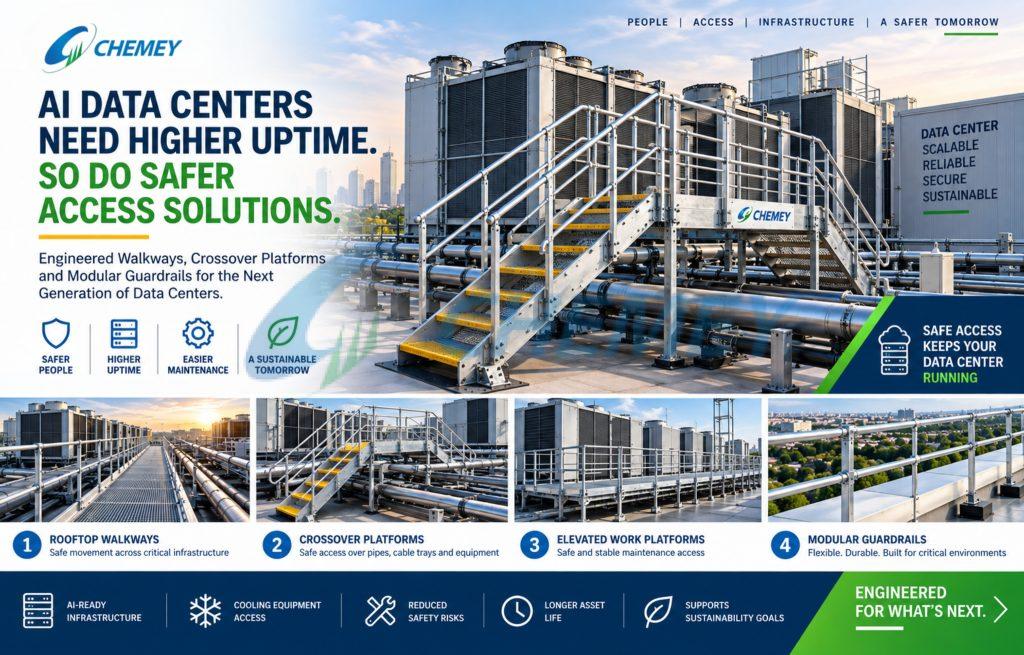
Data centers are changing rapidly. AI workloads, higher-density computing, advanced cooling systems and expanding infrastructure are increasing the complexity of modern facilities. That growth is creating a safety challenge beyond the server room: rooftops and elevated service areas are becoming increasingly busy maintenance environments. Cooling equipment, HVAC systems, generators, cable routes, pipework, ducts and other building services can create complex access requirements. Maintenance teams need to inspect, service and replace equipment without relying on improvised routes or unnecessary exposure to fall hazards. This makes data center rooftop safety an important part of facility design. The modern question is not simply, “Is the roof protected at the edge?” It is, “Can maintenance teams safely reach every serviceable asset, move around obstacles and work at height without disrupting critical operations?” A well-designed rooftop safety strategy can combine engineered walkways, crossover platforms and modular guardrails to create defined, repeatable and maintainable access routes. Why Data Center Rooftop Safety Is Becoming a Bigger Issue The data center sector is expanding quickly, particularly as AI increases demand for high-density computing infrastructure. JLL’s August 2026 India data center report projects India’s capacity to rise from about 1.6 GW in mid-2026 to 6 GW by 2029, with AI demand and hyperscale investment among the major growth drivers. At the same time, high-density AI infrastructure creates greater cooling requirements. S&P Global’s 2026 research notes that AI workloads generate substantial heat and that interest in liquid cooling is increasing. For facility teams, this means more mechanical infrastructure, more service points and potentially more maintenance activity around critical plant. Rooftop access therefore needs to be considered as part of the facility’s lifecycle design—not as an afterthought. The New Data Center Rooftop: A Maintenance Environment, Not an Empty Roof A modern data center roof may contain:• Chillers and cooling equipment• Dry coolers and condenser units• HVAC and ventilation equipment• Generators and supporting equipment• Pipework and process lines• Cable trays and electrical routes• Ductwork• Solar or energy infrastructure• Service platforms and access equipment These systems rarely exist in a simple grid. Equipment can create changes in level, narrow passages and physical obstructions. That is why rooftop safety should be designed around actual maintenance movement rather than simply around the roof perimeter. 1. Engineered Walkways Create Defined Maintenance Routes A rooftop walkway provides a dedicated route for maintenance personnel instead of requiring them to walk directly across the roof surface. For data centers, walkways can help:• Define predictable maintenance routes• Improve traction and pedestrian movement• Reduce unnecessary traffic across roof surfaces• Protect sensitive roof membranes where the system is designed for the application• Connect equipment service areas• Support repeatable inspection and maintenance workflows The important design principle is that the walkway should follow the actual service route. 2. Crossover Platforms Solve the Obstacle Problem Data center rooftops are rarely free of obstacles. Pipework, cable trays, ducts, HVAC equipment and structural elements can interrupt otherwise straightforward routes. A crossover platform creates a dedicated route over these obstacles. Typical applications include:• Crossing pipework• Crossing cable trays• Crossing ducts• Moving over equipment or roof-level obstructions• Connecting areas at different elevations• Providing safer access between adjacent service zones Chemey’s modular aluminum EnduStep Crossover Platform is designed to create safe routes over rooftop or floor-level obstructions and can be custom-designed for site-specific width, height, slope and obstacle conditions. Chemey also recommends checking roof-sheet point-load capacity before rooftop installation. 3. Modular Guardrails Provide Collective Edge Protection Walkways solve movement problems, but they do not replace edge protection. Where a maintenance route approaches an exposed edge, a suitable guardrail system can provide collective protection. Chemey’s EnduRail system is a modular railing and guardrail solution designed for industrial structures, walkways, work platforms and rooftop applications. Chemey describes its system as using marine-grade aluminium structural fittings, modular connections and configurations that can be modified or repaired as site requirements change. For data centers, modularity can be valuable because cooling and service layouts may evolve as infrastructure is upgraded. 4. Why Modular Systems Matter for Data Center Projects Data centers are designed for long operating lifecycles, but the equipment installed within them can change much faster. Cooling systems may be upgraded. Additional equipment may be installed. Cable routes can change. Maintenance access requirements can evolve. A modular system can provide:• Easier configuration changes• Component replacement• Extension of existing routes• Faster installation• Reduced dependence on field welding• Better adaptability to changing layouts 5. Protecting Roof Membranes and Critical Building Infrastructure Data center buildings have critical waterproofing and building-envelope requirements. Access systems therefore need to be coordinated carefully with the roof construction. Before specifying a walkway or crossover, engineers should review:• Roof type• Roof membrane• Structural capacity• Point loads• Fixing method• Waterproofing details• Wind exposure• Equipment clearances• Future maintenance routes Chemey’s crossover guidance recommends checking roof-sheet point-load capacity before installing a crossover on a roof. The correct engineering approach is therefore not simply “install a walkway.” It is “design an access route that is compatible with the roof and the equipment environment.” 6. Cooling Equipment Access Is a Major Design Consideration Cooling infrastructure is central to data center operations, and AI-driven workloads are increasing the importance of efficient thermal management. Maintenance teams may need access to filters, service panels, fans, motors, valves, pumps, sensors, pipe connections, electrical components and control equipment. Where equipment is elevated, a level maintenance platform may be required. Where equipment rows are separated by pipework or other obstacles, crossover platforms can provide a safer route. Where the route approaches an exposed edge, guardrails can extend the protected zone. 7. Designing for 24/7 Operations Data centers operate continuously. Maintenance may occur during planned service windows, at night, during emergency response, equipment replacement, commissioning or expansion projects. This makes predictable access especially important. A maintenance team should not have to improvise a route every time it needs to reach critical equipment. Defined walkways, crossovers and protected access routes can help create a repeatable maintenance environment. 8. Safety Should Be Designed Before Equipment Layout Is Finalized A common project challenge is adding safety
Industrial Rooftop Safety: A Complete Guide to Guardrails, Walkways & Fall Protection
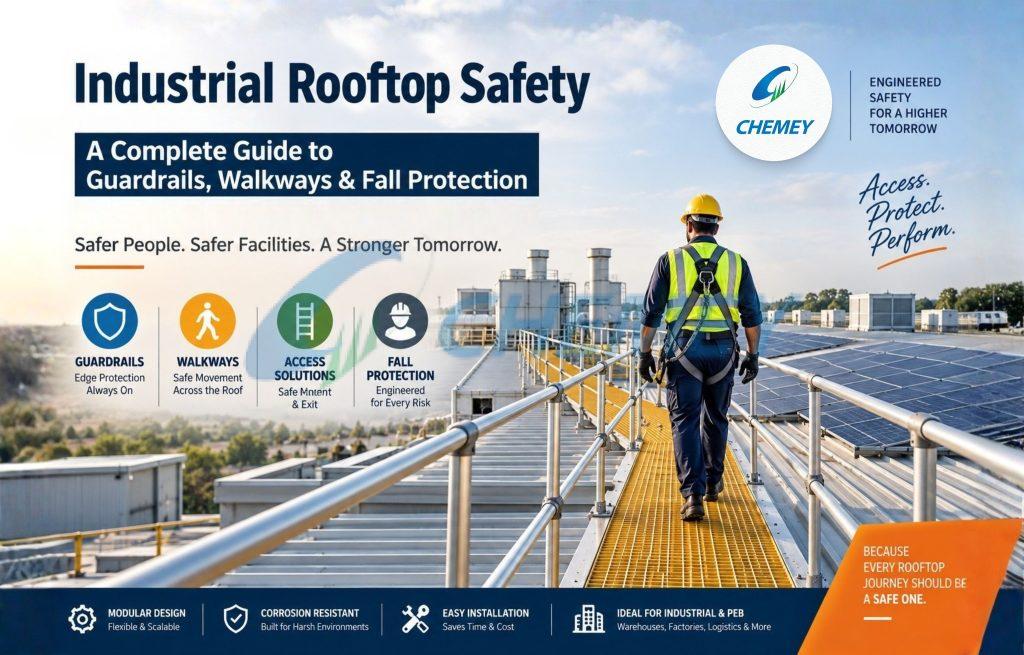
Industrial rooftops are no longer simply building covers. They have become active work environments supporting HVAC equipment, solar panels, exhaust systems, cable trays, communication equipment and other maintenance infrastructure. As a result, maintenance personnel may need regular access to rooftops throughout a facility’s operating life. The question is therefore no longer simply: “Is there a guardrail at the roof edge?” A better engineering question is: “Does the rooftop provide a complete and practical system for safe access, movement and maintenance?” A modern industrial rooftop safety strategy should consider edge protection, safe walking routes, access points, roof openings, fragile surfaces and fall protection systems together. What Is Industrial Rooftop Safety? Industrial rooftop safety refers to the engineered systems and procedures used to protect people who access, inspect, maintain or service industrial roof areas. A complete system may include:• Rooftop guardrails• Safety railings• Rooftop walkways• Safety gates• Crossover platforms• Skylight protection• Lifeline systems• Safe roof access• Equipment access platforms• Warning and controlled-access systems The exact combination should be determined through a site-specific risk assessment and engineering review. Why Industrial Rooftop Safety Is Becoming More Important Modern facilities are placing more equipment and infrastructure on their roofs. Common rooftop installations include:• HVAC units• Solar PV systems• Exhaust and ventilation equipment• Cable trays• Telecom equipment• Cooling systems• Electrical equipment• Inspection and maintenance routes Every additional installation can create another reason for workers to access the roof. A rooftop safety strategy should therefore be considered during the design stage rather than treated as an installation added after the facility is operational. 1. Rooftop Guardrails: The First Line of Passive Protection For frequently accessed rooftops, permanent guardrails can provide continuous collective protection around exposed edges. Unlike systems that require workers to connect themselves before accessing a hazardous area, a properly designed guardrail provides protection continuously. Key advantages can include:• Continuous edge protection• Reduced dependence on individual PPE behaviour• Modular configuration• Faster installation• Corrosion-resistant material options• Easy modification or expansion• Suitability for retrofit applications The correct system should always be selected according to the roof structure, loads, environment, fixing method and applicable safety requirements. 2. Rooftop Walkways: Safety Beyond the Roof Edge One of the most overlooked aspects of rooftop safety is how workers move across the roof. A guardrail can protect a person from falling over an edge, but it does not automatically create a safe route between HVAC equipment, solar panels, exhaust systems, inspection points, service areas and roof access points. A properly designed walkway can:• Define maintenance routes• Reduce uncontrolled movement• Improve slip resistance• Distribute loads• Protect roof sheets• Provide safer access around equipment The key principle is simple: Guardrails protect the perimeter. Walkways control movement across the roof. 3. Safety Gates for Controlled Rooftop Access A rooftop may have a safe perimeter, but access points can still introduce hazards. Safety gates can be used at locations such as:• Stairway exits• Ladder access points• Platform entrances• Walkway transitions• Restricted rooftop areas A properly selected self-closing or controlled-access gate can help maintain continuity of protection while allowing authorized personnel to enter the protected area. 4. Skylights and Rooftop Openings Must Not Be Ignored A common misconception is that a roof with perimeter guardrails is automatically safe. It isn’t. Skylights, roof openings and fragile roof sections can remain significant fall hazards even when the perimeter is protected. A rooftop risk assessment should identify:• Fragile rooflights• Openings• Service penetrations• Roof access hatches• Damaged or corroded sheets• Areas with limited load-bearing capacity Where appropriate, dedicated skylight fall-protection covers or barriers should be integrated into the overall rooftop safety design. 5. PEB Roofs Require Special Safety Planning Pre-Engineered Buildings are widely used for manufacturing facilities, warehouses, distribution centres and logistics facilities. PEB rooftops can present unique considerations because of their metal roof profiles, structural members, roof sheets and fixing arrangements. Important considerations include:• Roof profile: troughed, standing seam, built-up, concrete or sloped• Fixing method compatible with the roof structure• Structural loading, including wind and fixing loads• Compatibility with structural members• Environmental exposure such as coastal, humid or chemical-processing conditions Material selection can significantly influence long-term durability. 6. Solar Rooftops Are Creating New Safety Requirements The growth of rooftop solar has changed how many industrial roofs are used. Solar panels require periodic cleaning, inspection, electrical maintenance, cable inspection, panel replacement and performance checks. Workers therefore need reliable routes to reach equipment without unnecessarily exposing themselves to roof-edge or fragile-surface hazards. A modern solar rooftop safety design may combine:Solar panels + rooftop walkways + guardrails + controlled access + equipment access zones. 7. Passive vs Active Fall Protection One of the most important engineering decisions is whether the rooftop should rely primarily on passive or active protection. Passive protection examples include guardrails, safety barriers, protected walkways and skylight covers. Active protection examples include lifelines, harness systems, anchorage systems, fall restraint and fall arrest systems. This does not mean lifelines are unsuitable. They can be highly useful where guardrails cannot provide practical protection. The better engineering question is: Which combination provides the most appropriate protection for the actual rooftop activity? 8. Design the Rooftop Around Maintenance — Not Just Construction A common mistake is to design the building first and consider maintenance safety later. A better approach is to ask during design:• Who will access the roof?• Why will they access it?• Where will they need to go? Mapping these routes helps determine where to install guardrails, walkways, gates, platforms, crossovers, access ladders and lifelines. This transforms rooftop safety from a compliance exercise into an engineering design strategy. 9. Retrofit vs New-Build Rooftop Safety New-build projects allow safety systems to be considered alongside structural design, roof layout, HVAC placement, solar layout, access routes and maintenance zones. Existing facilities may have limited access, existing equipment, waterproofing constraints, corrosion, structural limitations and restricted working areas. Modular systems can provide flexibility for retrofit situations where the facility needs improved protection without redesigning the entire roof. 10. A Complete Rooftop Safety System Is More Than One Product No single product automatically makes an industrial rooftop
Safety Gates vs Guardrails: Which Protection System Fits Your Facility?
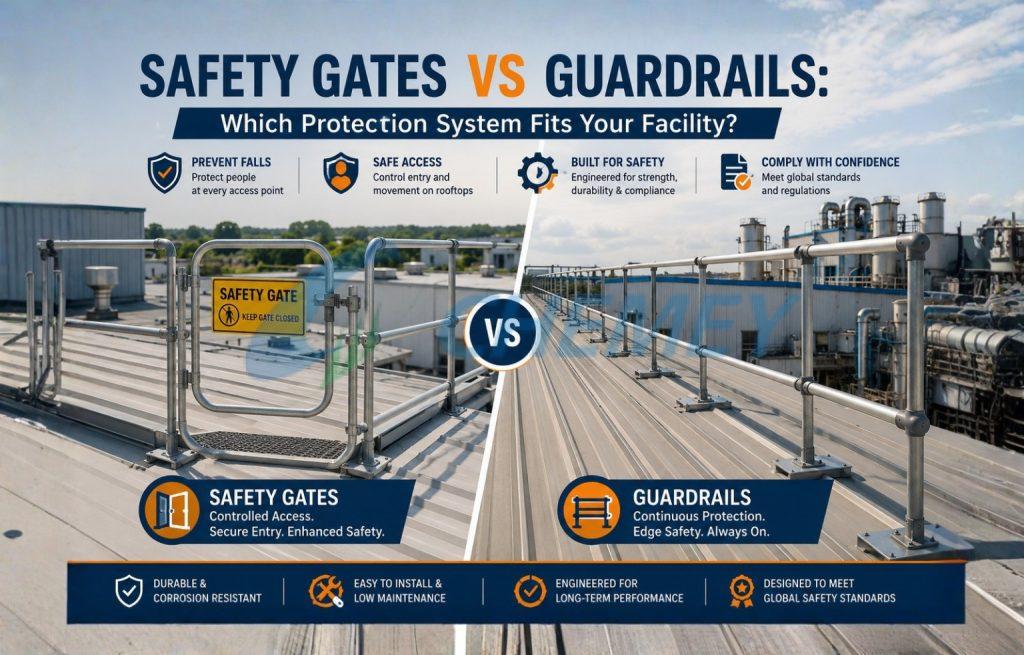
Workplace falls remain one of the leading causes of serious injuries in warehouses, manufacturing plants, distribution centers, rooftops, mezzanines, and elevated work areas. When selecting the right fall protection system, facility managers often compare safety gates vs guardrails to determine the most effective solution for improving workplace safety and supporting OSHA compliance. The right choice depends on your facility’s layout, access requirements, and fall hazards. While both industrial safety gates and guardrail systems are essential components of modern fall protection solutions, they serve different functions. Understanding how each system works can help businesses reduce risks, improve worker safety, and maintain compliance across high-risk environments. What Are Guardrail Systems? Guardrail systems are permanent or modular safety barriers installed along exposed edges, rooftops, elevated walkways, mezzanines, loading platforms, and maintenance areas. Their primary purpose is to prevent workers from entering hazardous fall zones and provide continuous edge protection. One of the biggest advantages of industrial guardrails is that they provide passive fall protection, meaning workers remain protected without relying on personal protective equipment or active intervention. This makes guardrail systems one of the most effective and widely adopted workplace fall prevention solutions. Best Applications for Guardrail Systems Rooftop guardrail systems Elevated walkways Loading docks and loading platforms Mezzanines Industrial access platforms Equipment maintenance areas Guardrail systems are ideal when continuous perimeter protection is required across large elevated work areas. What Are Industrial Safety Gates? Industrial safety gates are self-closing safety barriers designed to secure access points where guardrails must be interrupted. They are commonly installed at ladder openings, roof hatch access points, stairway entrances, elevated platform entry points, and maintenance zones. Unlike fixed guardrails, self-closing safety gates allow controlled worker access while automatically returning to a closed position after use. This ensures continuous access point protection and significantly reduces the risk of falls caused by human error. Best Applications for Industrial Safety Gates Ladder safety gates Roof hatch openings Stairway access points Equipment maintenance zones Restricted-access platforms Elevated platform entrances Modern industrial safety gates help facilities strengthen fall prevention strategies while maintaining safe and efficient movement throughout the workplace. Safety Gates vs Guardrails: Key Differences Feature Guardrail Systems Industrial Safety Gates Primary Purpose Continuous edge protection Securing access openings Installation Area Rooftops, platforms, walkways, mezzanines Ladders, roof hatches, stairways, entry points Worker Interaction No action required Opens and closes during access Protection Type Passive fall protection Controlled access protection OSHA Compliance Support High High Which System Is Better for Workplace Fall Protection? When evaluating safety gates vs guardrails, the answer is not choosing one over the other. The most effective industrial fall protection strategy combines both systems. Guardrail systems protect workers from exposed edges on rooftops, platforms, and elevated walkways, while industrial safety gates secure access openings where employees enter or exit protected areas. Facilities that rely only on guardrails may leave ladder openings and roof hatches exposed. Similarly, safety gates alone cannot provide continuous protection along rooftop perimeters or elevated workspaces. For comprehensive OSHA fall protection compliance, businesses typically achieve the highest level of protection by integrating guardrail systems and safety gates into a single workplace safety solution. How to Choose Between Safety Gates and Guardrails During a facility safety assessment, consider the following questions: Do employees work near exposed rooftop edges or elevated platforms? Are ladder access points or roof hatch openings present? Is maintenance regularly performed at height? Do you require permanent edge protection or controlled access protection? Are you looking to improve OSHA compliance and reduce workplace fall hazards? If the answer is yes to multiple questions, combining rooftop guardrail systems and self-closing safety gates is often the most effective approach for reducing fall risks and improving workplace safety. Conclusion Industrial fall protection systems play a critical role in preventing falls, improving rooftop safety, and supporting workplace compliance. Rooftop guardrail systems, rooftop walkway systems, self-closing safety gates, and access platforms provide effective protection for workers operating at height while improving maintenance efficiency and operational performance. Chemey is a trusted provider of industrial fall protection systems and rooftop safety solutions, delivering innovative products such as EnduRail® safety railings, rooftop walkway systems, self-closing safety gates, and customized access platforms. With a focus on workplace safety, durability, and engineering excellence, Chemey helps organizations create safer, more productive work environments. Contact Chemey today to find the right rooftop fall protection solution for your facility. FAQs What is the difference between safety gates and guardrails? Guardrail systems provide continuous edge protection along rooftops, walkways, and elevated platforms, while industrial safety gates secure access openings such as ladders, roof hatches, and platform entry points. Are safety gates required with guardrail systems? In many industrial facilities, safety gates are installed wherever a guardrail opening is necessary to maintain continuous fall protection and access point safety. Where should industrial safety gates be installed? Industrial safety gates are commonly installed at ladder access points, rooftop hatches, stairways, elevated platforms, and maintenance access areas. Do guardrail systems require worker training? Although guardrail systems provide passive fall protection, workers should still receive training on workplace safety procedures, hazard recognition, and fall prevention practices. Can safety gates and guardrails be used together? Yes. Combining industrial safety gates and guardrail systems creates a comprehensive fall protection solution that improves access point protection, workplace safety, and OSHA compliance across industrial environments.
Beyond Edge Protection: Engineering Safe RooftopWalkways for Industrial & PEB Facilities
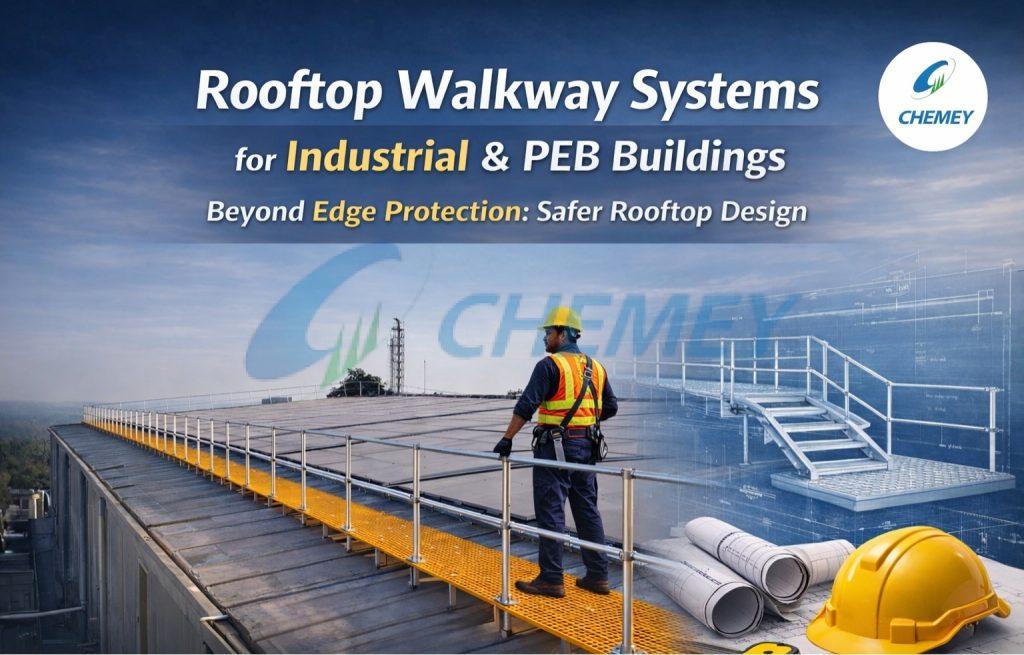
In rooftop safety discussions, fall protection is often limited to edge protection systems such as lifelines or guardrails. However, real operational risks rarely occur only at the roof perimeter. Modern industrial rooftops — especially Pre-Engineered Buildings (PEB), warehouses, data centers, and process plants — require maintenance personnel to move safely across the roof, not just near its edges. A safe rooftop is therefore not defined only by protection at boundaries, but by controlled and engineered movement pathways. This is where rooftop walkways become a critical design element. 1. The Missing Link in Rooftop Safety Design Many facilities provide: Edge guardrailsbut overlook: Safe walking routes between equipment. Common site observations include: Maintenance staff walking directly on roof sheets Unpredictable movement paths Damage to roofing panels Increased slip and trip hazards Unsafe shortcuts near edges Without defined pathways, even compliant fall protection systems fail to address operational risk. 2. Engineering Purpose of Rooftop Walkways Rooftop walkways are not merely access platforms — they serve multiple engineering functions: Load Distribution : Walkways distribute point loads from personnel and tools, preventing deformation of roof sheets. Movement Control : They guide maintenance teams along predetermined safe routes. Slip Resistance : Designed surfaces improve traction during dust, moisture, or monsoon conditions. Equipment Accessibility : Allows safe approach to HVAC units, solar panels, exhaust systems, and inspection zones. 3. Integration with Guardrail Systems The most effective rooftop safety strategy combines: Edge protection (guardrails) Defined walkways Crossover platforms Controlled access points Together, these create a passive safety ecosystem where workers naturally remain within protected zones. Consultants increasingly adopt this integrated approach because it reduces reliance on PPE-based safety procedures. 4. Design Considerations for Consultants When evaluating rooftop walkway systems, engineers should consider: Roof Type Compatibility Industrial Troughed sheet roofs Standing seam systems Concrete slabs Structural Fixing Method Non-penetrative or minimal penetration solutions Waterproofing integrity Environmental Durability Corrosion resistance UV exposure Industrial chemical environments Maintenance Workflow Mapping Walkways should follow actual equipment servicing routes — not geometric layouts. Future Expansion Provision for additional equipment installation and pathway extension. 5. Operational Benefits Often Overlooked Facility operators report significant improvements after installing engineered walkways: Faster maintenance execution Reduced roof damage Lower safety supervision requirements Improved compliance audits Better worker confidence These benefits often justify walkway integration during initial design rather than retrofit. 6. Consultant Recommendation During early design stages, rooftop safety evaluation should include: Where will maintenance personnel walk? How frequently will equipment be accessed? Are pathways naturally guiding safe behavior? Can safety function without procedural enforcement? Designing walkways together with guardrail systems transforms rooftop safety from compliance-driven to engineering-driven. Conclusion Edge protection prevents falls — but engineered walkways prevent unsafe movement. As rooftop equipment density continues to increase, consultants play a key role in designing rooftops that are safe, maintainable, and operationally efficient throughout the facility lifecycle.
Rooftop Modular Guardrail Systems: A Smart Safety Solution for Industrial Facilities
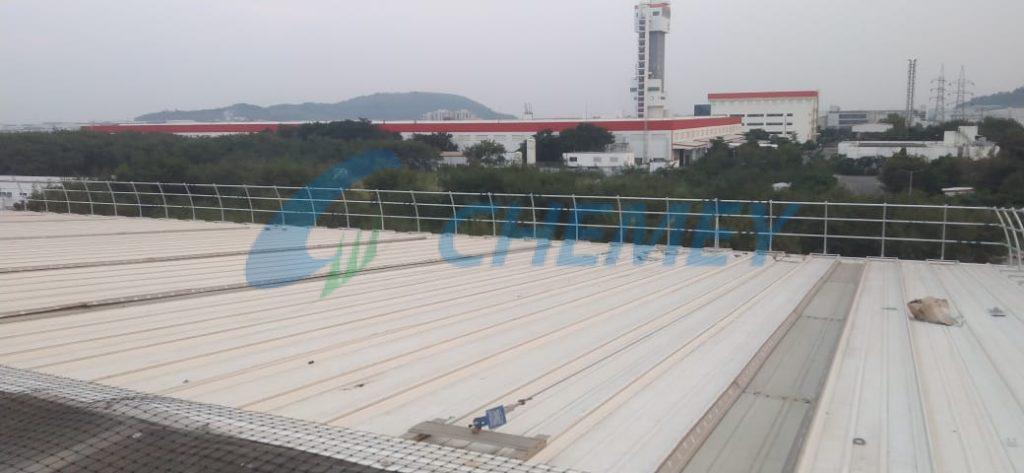
Rooftop Modular Guardrail Systems: Enhancing Industrial Safety & Compliance Rooftop areas in industrial facilities are often overlooked when it comes to safety planning. However, maintenance activities, inspections, and equipment servicing make rooftops high-risk zones. Installing a rooftop modular guardrail system is one of the most effective ways to ensure fall protection, regulatory compliance, and long-term operational safety. This blog explores why modular guardrail systems are becoming the preferred choice for industrial rooftops and how they deliver superior safety compared to conventional railing solutions. Why Rooftop Edge Protection Is Critical Industrial rooftops pose serious fall hazards, especially where there is: Frequent movement of maintenance personnel Equipment installations near roof edges Absence of permanent edge protection Safety consultants and regulatory bodies increasingly mandate edge protection systems to reduce workplace accidents and ensure compliance with occupational safety norms. Limitations of Conventional Rooftop Railings Traditional welded or fabricated guardrails often fail to meet long-term rooftop safety requirements due to: Poor corrosion resistance in outdoor environments Inconsistent welding quality Difficult modifications during plant expansion High maintenance costs over time On-site hot work increasing safety risks during installation These limitations have led industries to adopt modular guardrail systems as a more reliable alternative. What Is a Modular Rooftop Guardrail System? A modular guardrail system is a pre-engineered, non-weld safety solution designed for quick installation and long-term durability on rooftops. Key Characteristics: Precision-engineered components Non-welded construction for uniform quality Designed for outdoor exposure Easily configurable and expandable This system ensures consistent safety performance across all rooftop areas. Key Benefits of Modular Guardrail Systems Superior Corrosion ResistanceManufactured using high-quality GI pipes and aluminum fittings, modular guardrails are ideal for harsh rooftop environments. Faster InstallationPre-engineered components eliminate on-site fabrication, reducing installation time and site disruption. Compliance with Safety StandardsModular systems are designed to meet consultant-approved load and height requirements, ensuring regulatory compliance. Low Maintenance & Long Service LifeNon-welded construction minimizes rust points, lowering maintenance costs over the system’s lifespan. Future-Ready DesignModular layouts allow easy modification, relocation, or expansion without dismantling the entire system. Applications of Rooftop Modular Guardrails Manufacturing plants Electrical and engineering facilities Warehouses and logistics centers PEB structures Commercial and industrial rooftops Any facility with rooftop access can significantly reduce fall risks with a properly designed modular guardrail system. Choosing the Right Rooftop Safety Partner Selecting the right supplier is as important as choosing the right system. A reliable partner ensures: Engineering-backed designs Consultant-aligned safety compliance Quality-controlled materials Professional installation support Companies like Chemey Mechatronics LLP specialize in delivering standardized, compliant, and durable rooftop safety solutions tailored to industrial requirements. Conclusion Rooftop safety is no longer optional—it is a critical component of modern industrial infrastructure. Modular rooftop guardrail systems offer a smart, efficient, and future-proof solution to protect personnel, ensure compliance, and reduce long-term maintenance costs. Investing in the right edge protection system today helps industries create safer workplaces for tomorrow. Chemey Mechatronics LLP – Your Complete Rooftop & Access Safety Solutions For more information, call +91 9099033719 or send an e-mail to contact@chemey.com
Top 5 Ways to Enhance Fall Safety on Your Warehouses and Shop Floor
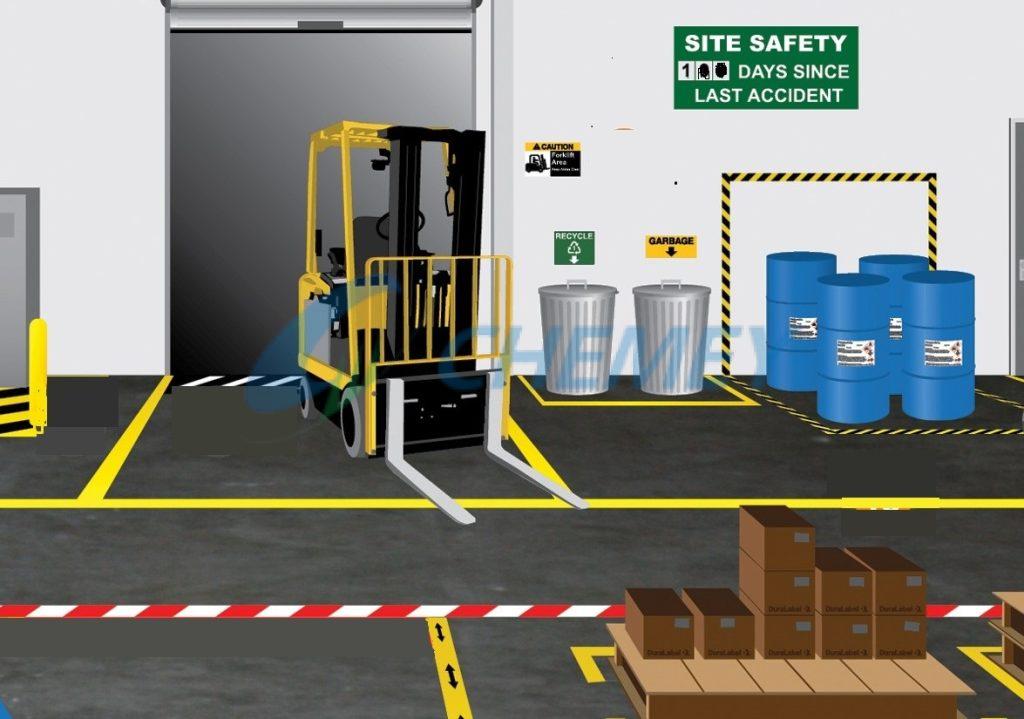
As your workshop or warehouse grows—whether through new equipment, an expanding workforce, or increased activity—so do the risks, particularly those related to ground-level falls. But fear not! With a few smart strategies and the right safety measures, you can keep your team safe and your operations smooth. This blog explores five effective strategies to mitigate these risks, focusing on modular railing, access control gates, and other critical fall protection devices. Here’s how. Understanding Ground-Level Fall Protection Before we get into the nitty-gritty, let’s discuss the often-overlooked dangers lurking at ground level. Sure, we think of fall hazards as high-up issues, but many fall-related injuries occur right at our feet. The risks are real—and preventable—from machinery and lifting operations to stacked materials and unsecured tools. Common Ground-Level Fall Hazards Here are some of the usual suspects: Stacked Materials: Elevated or not, these can be dangerous if improperly managed. Forklift Operations: A slip, a trip, or a misplaced tool can lead to disaster. Unsecured Tools: Anything loose above can quickly become a hazard below. Machinery: Risky operations may lead to lacerations, electrocution, etc. Lifting Operations: Suspended equipment and materials pose serious threats. Remember, fall hazards aren’t just about heights. Tripping, slipping, and falling objects are issues you can’t afford to ignore. Top 5 Tips to Boost Fall Safety on the Shop Floor #1: Don’t Overload Storage Areas While keeping workers safe is the top priority, preventing falling objects is just as crucial. The secret sauce? Effective material storage management. Here’s how to do it right: Avoid overcrowding: Keep storage areas spacious and clutter-free. Secure your items: Make sure everything is firmly in place. Stay organized: A tidy space is a safe space—no tripping over loose materials here! #2: Enhance Mezzanine Access and Security Mezzanines offer great storage solutions, but they need to be secure without becoming inaccessible. Here’s how to strike the balance: Follow OSHA requirements: Safety first, compliance always. Clear the area: Keep mezzanine surroundings free of obstacles. Smart storage placement: Keep storage zones away from entry points. Modular guardrails: These should be customizable and adaptable as your needs evolve. Invest in Pallet / Mezzanine gates: One side open at a time for controlled access. #3: Guard Machines Without Sacrificing Accessibility Protecting machinery shouldn’t mean blocking access for those who need it. Here’s how to safeguard your equipment without slowing down operations: Modular railing: Customizable and easy to install, this is your best friend. Self-closing safety gates: Vertical lift gates are ideal for tight spaces. Strategic machine placement: Keep dangerous equipment out of high-traffic zones and consider remote-operated options with built-in safety features. #4: Identify Machine Hazards Like a Pro Effective machine guarding starts with a sharp eye and a solid understanding of OSHA standards. Watch out for: Exposed moving parts: These can lead to serious injuries if not properly shielded. Sharp components: Anything that can cut, pierce, or crush needs guarding. High-voltage areas: Exposed wiring is a no-go. Unsecured machines: Bolting down equipment is essential. Always know where the power shut-offs are and never block critical access points with barriers. #5: Tackle Spills and Slip Hazards Head-On Spills and slippery surfaces are a leading cause of falls, but they’re entirely preventable. Keep an eye on: Oil slicks: Mobile machinery can leave these in its wake. Dust and debris: Cutting or grinding equipment can create slippery particulates. Unanchored mats: These can be a hidden danger if not properly secured. Chemical spills, Particularly in processing areas. Condensation: Particularly around machines and cold storage. Implement strict cleaning protocols and ensure well-maintained surfaces to minimize slip hazards. A Safer Shop Floor Starts Here Fall protection isn’t just for those working at heights—it’s essential at every level of your work. From smart storage practices to vigilant maintenance, these tips will help you to create a safer environment for everyone. Would you like to know more about emerging technologies and trending solutions for fall protection when working at heights or Safety on the Shop Floor? For more information, call +91 9099033719 or send an e-mail to contact@chemey.com
Evaluating Safety Equipment Suppliers
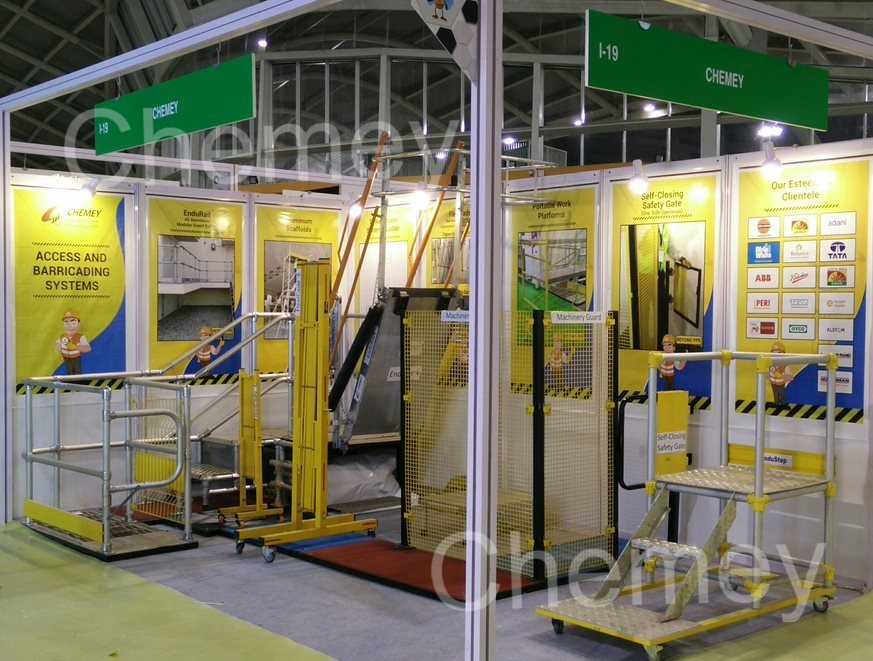
The safety equipment industry is constantly evolving to meet the emerging trends and challenges in workplace safety. Here are some points that need to be considered when you are evaluating safety equipment suppliers for revolutionizing workplace safety Is the supplier remain updated with emerging trends and challenges in the safety equipment industry? Is the supplier known for their innovative products and cutting-edge technologies? Is the supplier using cutting-edge technologies in safety gear manufacturing? When searching for safety equipment / fall protection system suppliers, you can also check online blogs or industry-specific needs and standards. These resources can provide you with more options and information on suppliers’ capabilities and who may offer you the correct products and services to meet your specific safety needs. Chemey always remains updated, guides the users for the changes, and incorporates those changes in their manufacturing so that they can offer products with emerging trends as per international requirements. The following are new Norms in Guardrails and Safety Gates which one should be aware of when selecting Handrails and Safety Swing Gates for their workplace. A) OSHA – COMPLIANCE of Guardrail (New Norms) The section of the OSHA code that specifies most of the primary guardrail requirements and relates to safety railing is 1910.29. Specifically, the following sections are the most relevant to railing and guardrails for fall protection. 1910.29(b)(1)The top edge height of top rails, or equivalent guardrail system members, are 42 inches (107 cm), plus or minus 3 inches (8 cm), above the walking-working surface. The top edge height may exceed 45 inches (114 cm), provided the guardrail system meets all other criteria of paragraph (b) of this section 1910.29(b)(2) Mid rails, screens, mesh, intermediate vertical members, solid panels, or equivalent intermediate members are installed between the walking-working surface and the top edge of the guardrail system as follows when there is not a wall or parapet that is at least 21 inches (53 cm) high: 1910.29(b)(3)Guardrail systems are capable of withstanding, without failure, a force of at least 200 pounds (890 N) applied in a downward or outward direction within 2 inches (5 cm) of the top edge, at any point along the top rail. 1910.29(b)(4)When the 200-pound (890-N) test load is applied in a downward direction, the top rail of the guardrail system must not deflect to a height of less than 39 inches (99 cm) above the walking-working surface. 1910.29(b)(5)Midrails, screens, mesh, intermediate vertical members, solid panels, and other equivalent intermediate members are capable of withstanding, without failure, a force of at least 150 pounds (667 N) applied in any downward or outward direction at any point along the intermediate member. 1910.29(b)(6)Guardrail systems are smooth-surfaced to protect employees from injury, such as punctures or lacerations, and to prevent catching or snagging of clothing. 1910.29(b)(9)Top rails and mid-rails must be at least 1/4 inch (0.6 cm) in diameter or thickness. 1910.29(f)(3)Surfaces. Handrails and stair rail systems are smooth-surfaced to protect employees from injury, such as punctures or lacerations, and to prevent catching or snagging of clothing. 1910.29(k)(1)A standard toe board shall be 3 1/2 inches in vertical height from the top edge to the bottom level of the floor, platform, runway, or ramp. B) OSHA-COMPLIANCE of SAFETY GATES (New Norms) OSHA’s new rule (November 2016) on walking-working surfaces and fall protection, OSHA states, “OSHA believes that double chains do not fully protect workers from falls at hole entrances, and therefore, is adopting the existing and proposed requirements that entrances to ladderway floor and platform holes have a self-closing gate or be offset to prevent workers from falling.” Therefore, according to OSHA, a gate is required at the top of all ladders. Below is the new OSHA code reflecting this requirement: 1910.28(b)(3)(iv)Each employee is protected from falling into a ladderway floor hole or ladderway platform hole by a guardrail system and toe boards erected on all exposed sides, except at the entrance to the hole, where a self-closing gate or an offset must be used. 1910.29(b)(13)When guardrail systems are used around holes that serve as points of access (such as ladderways), the guardrail system opening: 1910.29(b)(13)(i)Has a self-closing gate that slides or swings away from the hole, and is equipped with a top rail and mid rail or equivalent intermediate member that meets the requirements in paragraph (b) of this section. Would you like to know more about emerging technologies and trending solutions for fall protection when work at heights? Or Do you need a custom quote? For more information, call +91 9099033719 or send an e-mail to contact@chemey.com Follow us on Facebook | Instagram | Linkedin | Twitter
Roof Safety: Solar Rooftop Walkway | Chemey
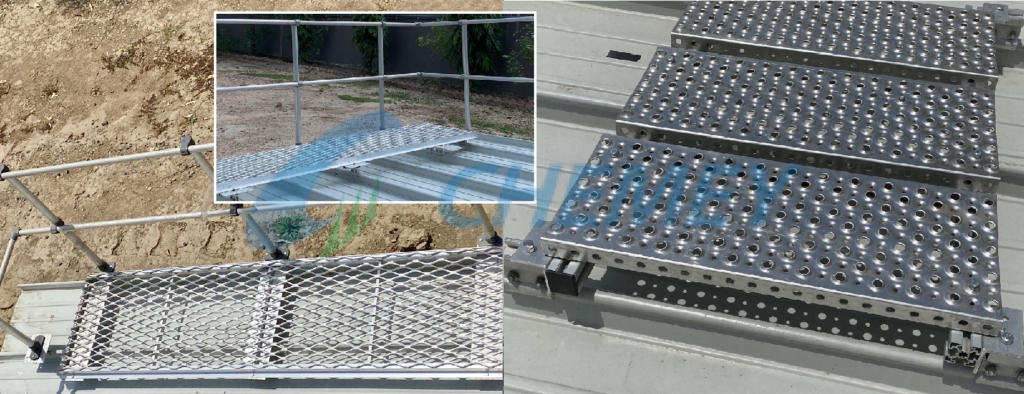
Roof safety is a system of preventive and safety measures when performing work and repairs on rooftops. Roof safety should be practiced while on the job to avoid personal injuries and structural damage. Performing roof work exposes workers to risks such as falls, which are the leading cause of death in industry. As rooftop solar installations grow, so grows the need to access the roof safely. Part of passive fall protection product for roof top safety is having a proper rooftop railing installed. On a metal roof there are other safety concerns also. The metal roof may not be designed for people to be walking on any part other than the seam or purlins.Additionally, the metal ribs/crestcan cause a significant trip hazard. EnduPlank/EnduGrate rooftop walkway is a solar rooftop walkway solution that is primarily designed to attach to metal roofs. It connects to the standing seam or corrugated industrial troughed roof top using clamps and screws. These sections can easily be laid down to form a walkway around rooftop solar panel installations. With a variety of mounting methods available, Endu Plank works on virtually any roof surface. Endu Grate can be installed on almost every profile of metal roof with our variety of mounting options. Our rooftop walkway can be paired with an integrated railing and crossover work platform and stairs to completely protect your workers as they access your roof. Chemey’s Solar Rooftop Walkway System “EnduPlank” can be installed with OSHA compliant guardrail. That both together protects workers from slips as well as roof edges and other hazards. The EnduPlank solar roof top walkway system is fully compatible with all horizontal lifeline systems to yield free standing walkways. Additionally, it is easy to cross Roof Skylight Safety Cover when it comes along the way and provide additional safety over that area. Features: Works on Industrial troughed profile and standing seam metal roofs Provides a non-slip, level surface for workers to safely access rooftop equipment Can be leveled to any flat or sloping roofs Pair with OSHA compliant guardrail or lifeline for 360° protection on any roof OSHA 1910.28(b)(13) Compliant Other Roofing Safety Tips: Discuss common hazards & assess the condition of the work area. Confirm that proper permits have been secured, and encourage the team to verbalize the safety tips to follow Work only during good weather conditions and avoid extreme heat/cold Approach ladders should be stable and properly secured or tied off Wear proper PPE Carefully position ropes and extension cords used for maintenance tools & equipment so they’re not underfoot Use rooftop guardrails whenever possible Skylights should be covered &guarded appropriatelySignage should be visible in your work area Clean up the roof before and after work and make sure it is clear of dirt and debris Installing permanent rooftop walkway is a wise choice when making your industry a better and safer place to work for your employees. If you are confused that which standard to follow and what walkway is safe to install on your rooftop, that makes your employees, workers, inspectors, and managers safe, get in touch with us for Endu Plank Solar Rooftop walkway inquiries. Need help? We have a team of professionals that can help you sort through each of these questions to find the right solution for you. Follow US On Facebook | Instagram | Linkedin | Twitter
Protecting Elevated Spaces In Manufacturing Facilities & Warehouses : Ladder Safety Gates
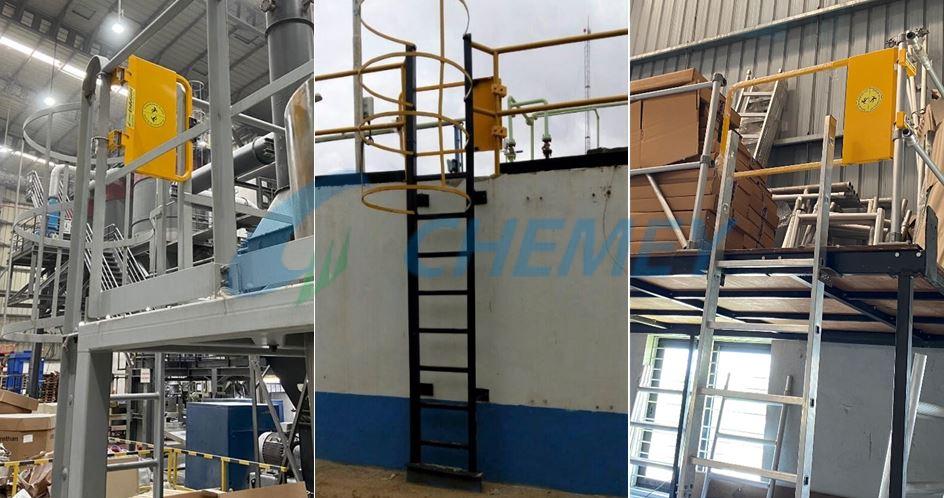
Ladders are essential in any workplace facility that uses elevated work planes, storage areas, and walkways to maximize the usable space of the facility. Most ladders used for this purpose are fixed ladders. They are permanently attached to a mezzanine, catwalk, part of the equipment, or the building itself. To comply with OSHA fall protection guidelines, there are several steps you can take to protect workers utilizing fixed ladders. Anytime workers have to climb a fixed ladder, especially when also carrying tools, equipment, or other items, there’s a risk of falls. They must be protected from falling into a ladderway employing a self-closing safety swing gate, ladder safety gates, or guardrail offset to guide employees away from the dangerincluding installing an integrated ladder safety system, providing fall arrest systems, and maintaining fixed ladders properly. OSHA 1910.23 (d) insists following for Fixed Laddersused anywhere in your facility: Ladder steps or rungs must be evenly spaced, so workers aren’t exposed to undo fall risk. Steps or Rungs must have a non-slip surface to protect employees. Fixed ladders must be strong enough to handle their maximum intended load without failing. You must keep ladder steps or rungs clear of debris and other fall hazards. Specific OSHA Fall Protection Device Requirements for Fixed Ladders A few things you should know about Fixed Ladder Fall Protection Equipment:You understand that there are serious fall hazards associated with the fixed ladders in your facility. You also need to be very careful to follow the standards for the fall protection equipment you choose which include : Ladder Safety System Ladder climbing safety systems are permanent vertical lifeline systems, that can be comprised of cable or rail. Eachfixed ladder is equipped with a ladder climbing safety system, all components must meet OSHA 1910.29(i) requirements. The ladder climbing safety system should be inspected before use and periodically based on the manufacturer’s requirements. Any worn, damaged, or otherwise, defective equipment should be taken out of service immediately. Personal Fall Arrest System This type of system is designed to stop a fall and absorb the energy before the worker comes into contact with a lower level. A typical personal fall protectionequipment consists of a full-body harness, connectors, and anchorage. It’s also imperative that the system is inspected before use regularly based on the manufacturer’s requirements, for any signs of damage or wear. Any piece of equipment that fails inspection or has been impacted, shall be removed from service immediately. Ladder Safety Gates Protecting the entrance of a ladderway is key to preventing falls in your facility. One way to do this is with swing gates that attach to the guardrail system used to protect the elevated surface the ladder leads to. A self-closing gate is a preferred method of protecting ladder entrances in most facilities. Ladder safety gates and other types of the self-closing gate must meet the general requirements per OSHA 1910.29.Whether you’re running a busy warehouse or a manufacturing facility, you need to take full advantage of every square inch of space you have. That means elevated platforms, mezzanines, catwalks, and other work areas. While you may have guardrails installed around the perimeter, your workers still need access to the space, and it’s up to you to keep them safe as they climb those fixed ladders. Fixed Ladder Fall Protection Begins with Training No matter how many Industrial safety swing gates or other safety devices you install or provide, mistakes can still lead to falls. That’s why it’s vital that you provide adequate fall prevention training for incoming employees as well as ongoing training for all members of your organization. For fixed ladders, it’s important to teach workers to: Always face the ladder. Maintain three points of contact whenever climbing a ladder. Inspect rungs or steps before use for signs of dampness or anything slippery. Inspect the fall arrest system or ladder safety system for signs of damage. Properly secure the body harness, lanyard, and lifeline, Enter and exit the ladder entrance through a self-closing swing gate- Chemey EnduGate Never over-extend/stretch yourself to the side of the ladder. Do not carry loads that can cause a loss of balance on a fixed ladder. Government authorities are very strict when it comes to requiring employers to compliance standards and regulations. However, they’re not inclined to give specific advice about which safety device or system you should use in a given situation. For that, you need a qualified safety expert like the specialists at Chemey. We’ve been a leading manufacturer of passive fall protection products, specializing in safety gates, Pallet Safety Gates for more than 5 years. Put our safety equipment expertise and industry experience to work for you to protect your employees from fall hazards in your facility and maintain your compliance. Need help? We have a team of professionals that can help you sort through each of these questions to find the right solution for you. Follow US On Facebook | Instagram | Linkedin | Twitter
Guardrails – A popular form of fall protection on rooftop
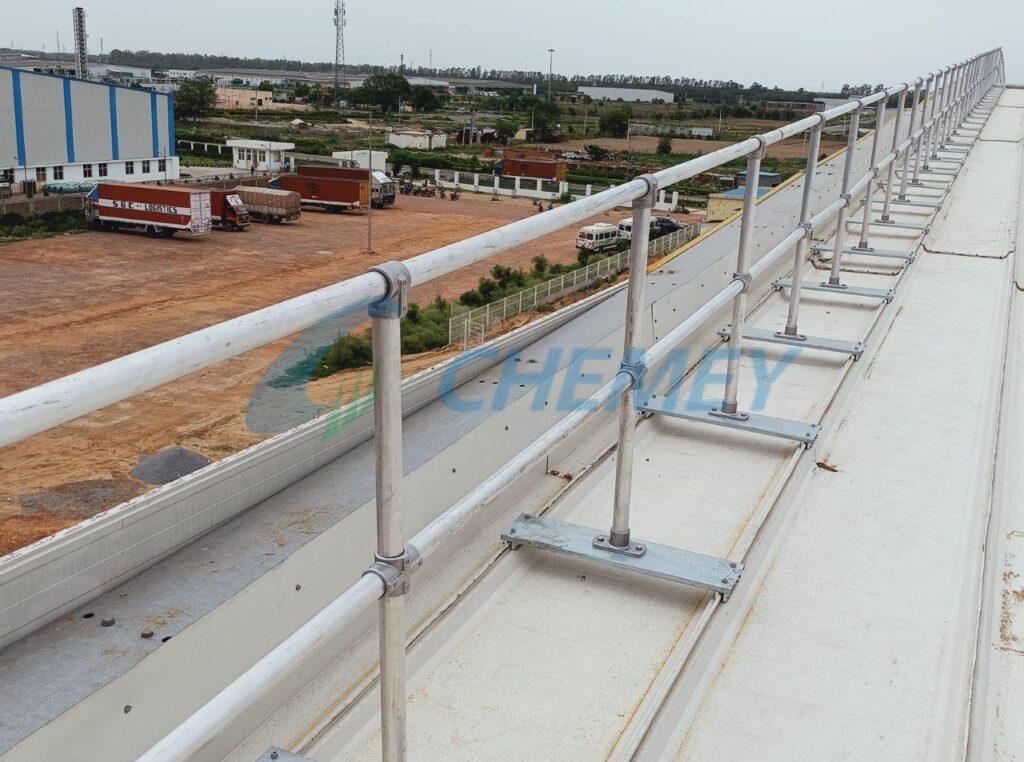
Whenever our customers ask us to recommend a rooftop safety solution, we always follow hierarchy of hazard control to recommend the most appropriate form of fall protection. Avoid working a height or Eliminate hazard by redesigning work practice Prevent falls using collective equipment Restraint falls using personal protective equipment Arrest Fall using personal protective equipment If the hazard cannot be eliminated by redesigning the danger or through changing working practices, then the preferred option is to use collective measures by installing guardrails to protect people working on or accessing workplace roof. But when you start looking at the different types of guardrails and what standards they need to conform to, the decision is not as straight forward as you might assume. What type of rooftop guardrail is best? If you want to protect people working on your rooftop, then you will need a permanent guardrail, as access to the roof will be required several times a year. Many permanent guardrails are fixed directly into the roof structure, and while this will provide suitable protection, these systems do have their drawbacks. For example, drilling holes into the roof to fix the system could void your roof warranty or cause costly water damage if proper care is not take at time of installation. Properly designed and installed guardrail provides strength, stability and safety, and does not require the roof membrane to be penetrated during installation in case of standing seam roof. Which standards should your roof guardrail comply with? It is always preferable to have standards for most fall protection systems.However, when it came to permanent guardrails there was a lot of confusion, especially as existing standards were open to individual interpretation. Roof edge protection was typically designed to comply with one of the following standards: EN 14122-3 standard, which is intended for guardrails around plant and machinery OSHA Standard 29 CFR 1910.29 International Building Code Section 1607.8 EN 13374 2004 Temporary edge protection systems BS 13700:2021 , which is for permanent counter weighted guardrail systems that are not fixed directly to the roof’s structure Installing permanent rooftop guardrail is a wise choice when making your industry a better and safer place to work for your employees. If you are confused that which standard to follow and what railing is safe to install on your rooftop, that makes your employees, workers, inspectors, and managers safe, get in touch with us for Endurail Rooftop Guardrail inquiries.